THE BARONESS' HOUSE
Location: Prežihova ulica 8, Smetanova ulica 25
Architect: Fritz Friedriger, Ubald Nassimbeni
Time of construction: 1903, 1921
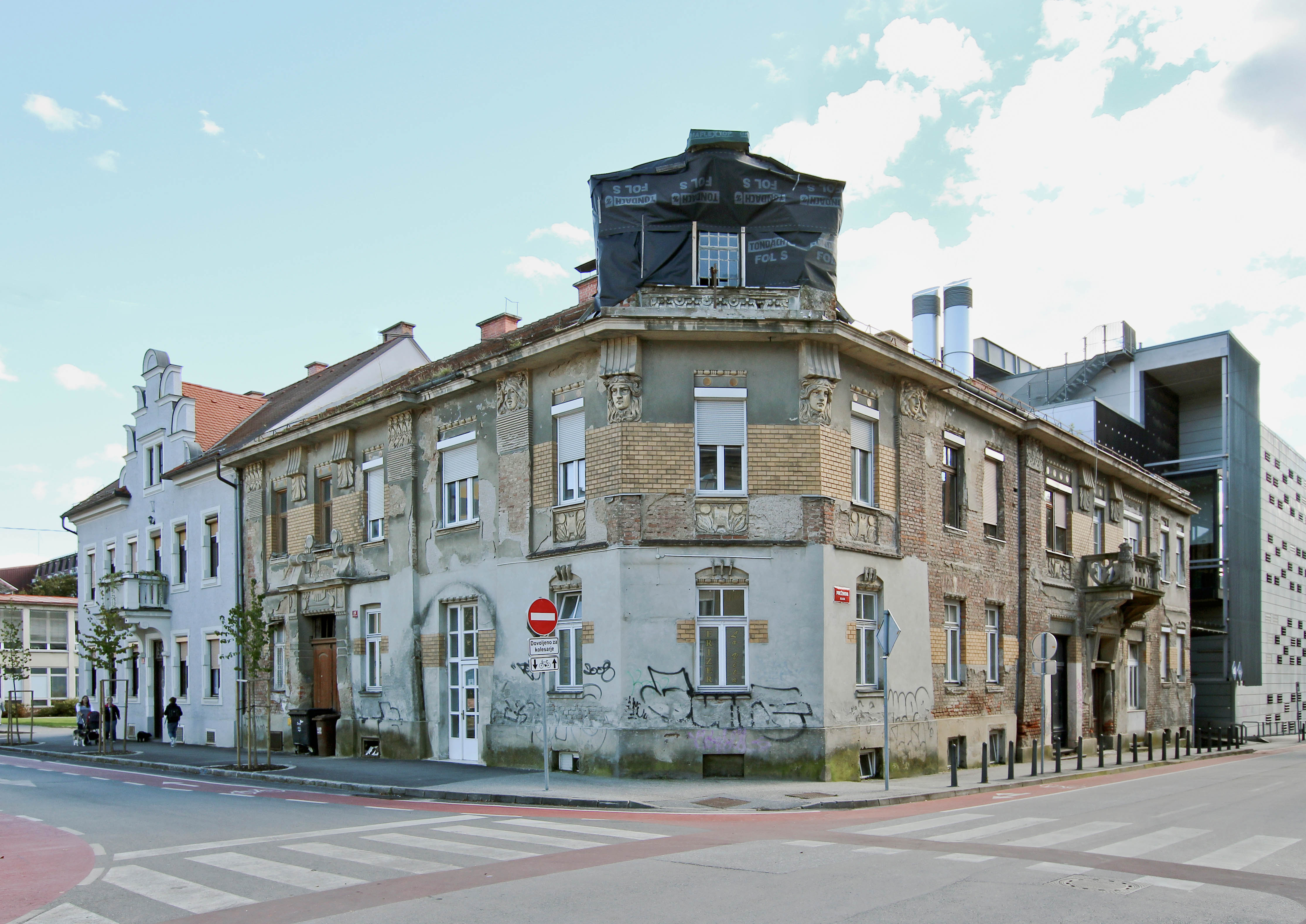
The residential building on the corner of Prežihova and Smetanova ulica in the former Koroško suburb was named after its commissioner, Baroness Emma Mixich Rast. The typical urban residential house for lease was planned and built by architect and construction engineer Fritz Friedriger. The apartment block of baroness Mixich Rast is considered to be the best example of Art Nouveau architecture in Maribor or a "modest peak of pure Art Nouveau in Maribor".
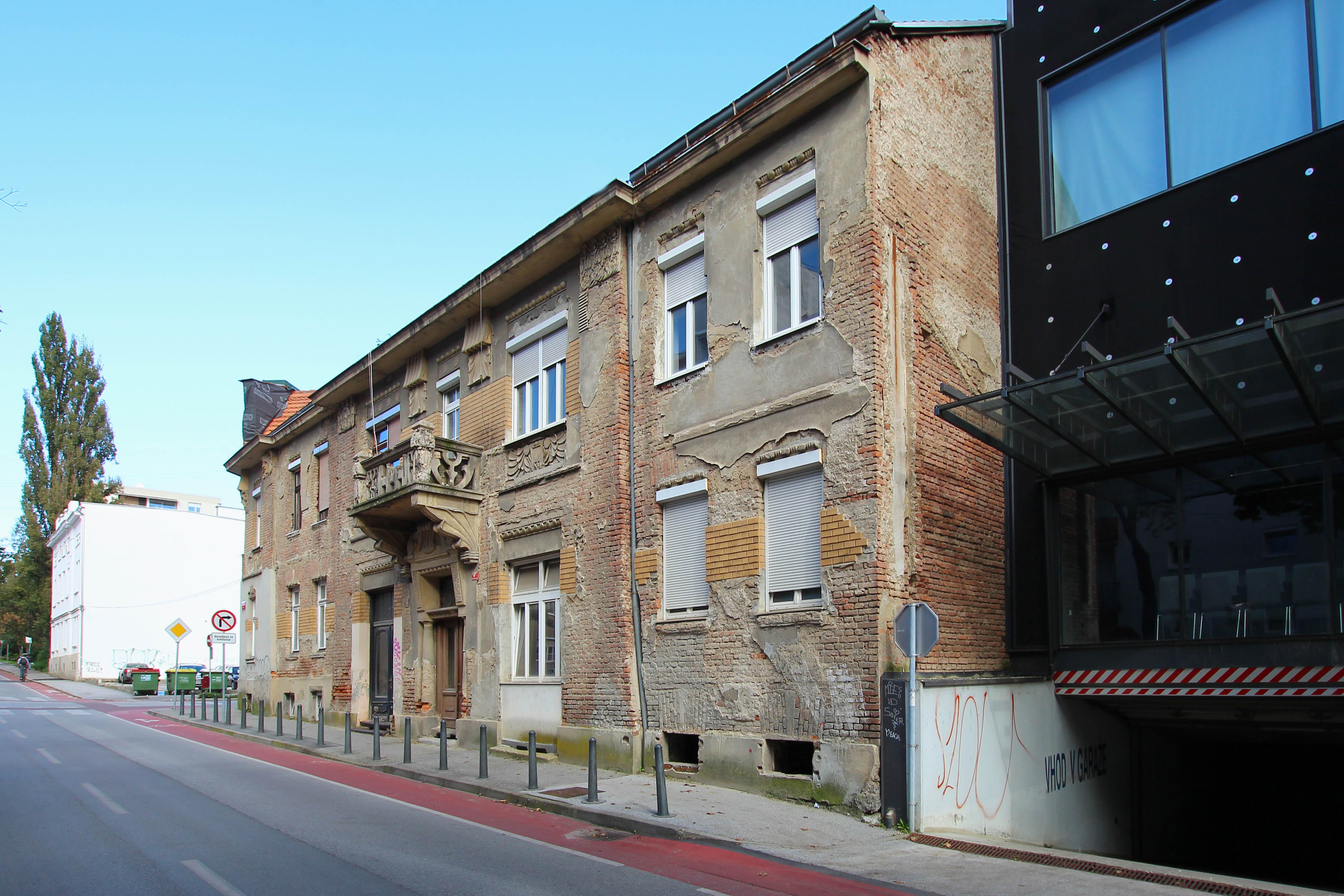
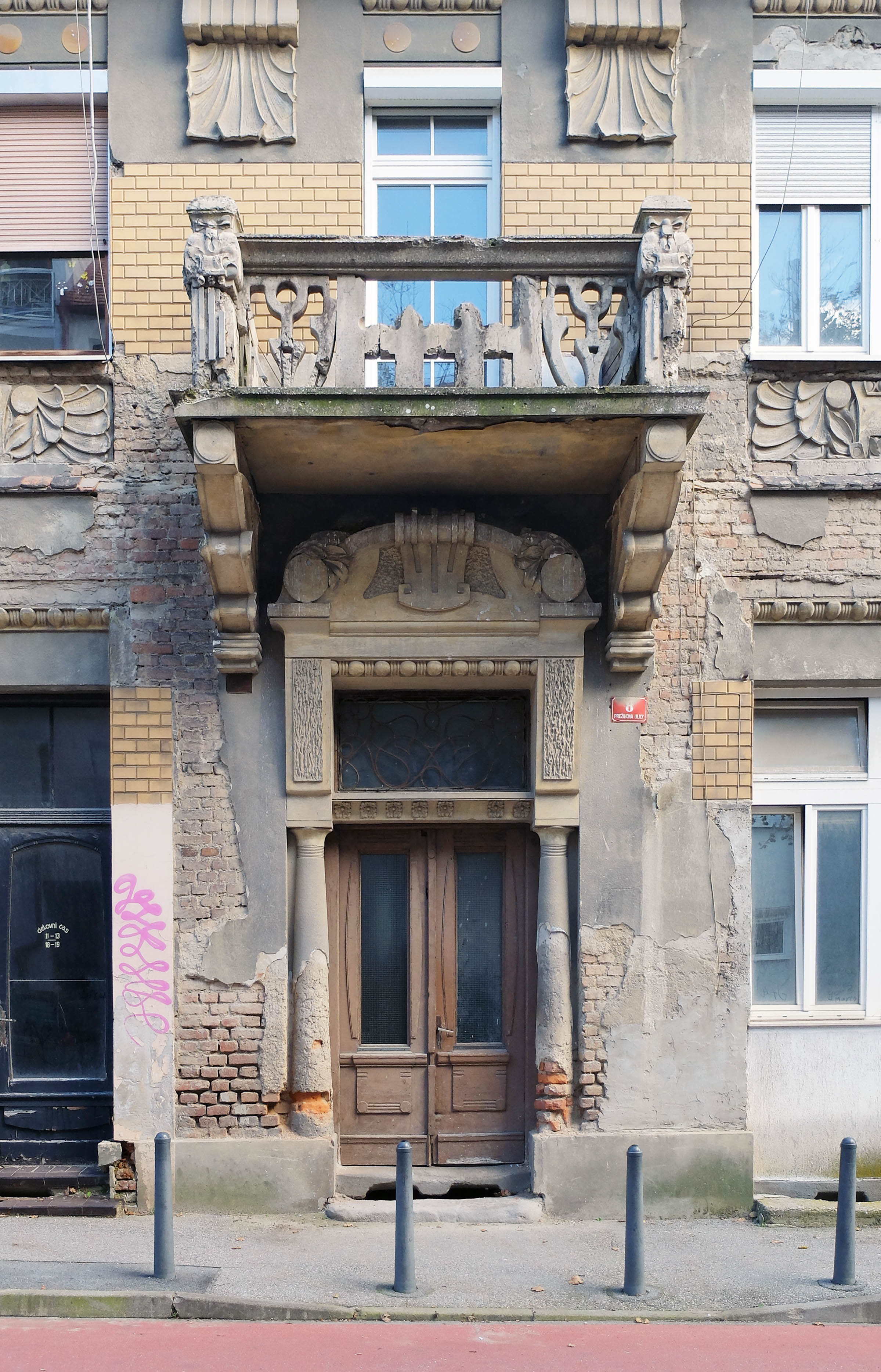
The ground plan of the two-storey building with five bays facing Smetanova ulica and eight bays facing Prežihova ulica is in the shape of the letter L. The corner where the streets intersect is truncated. The driveway to the courtyard is on Smetanova ulica, while the entrance for pedestrians is on the western façade. The latter is emphasised by two columns, plaster ornamentation and a console balcony. The metal fence of the staircase that leads from the ground floor to the attic was made after Friedriger's plan. Each storey has two large and four small apartments. In 1921, Adolf Klubička commissioned the construction of the mansard apartment, which was made after the plans by Ubald Nassimbeni.
Friedriger's preserved plans from 1902 and 1903 are an excellent illustration of the transition from Historicism to Art Nouveau, applied by architects and commissioners around 1900. Friedriger's original plans, most of them dated 1902, show a typical Historicist building. Clearly, the baroness was satisfied with these as she approved them herself. It is evident from the plans that she first planned to build a business-residential building with a café on the ground floor and a large hall on the storey. In the wing on Smetanova ulica, an area for an orchestra was planned beside the café. On the storey above it a stage or a smoking area or a buffet was planned. At first, the apartments were planned only on the sides of both wings. Friedriger sketched Historicist ornamentation on the façades. The baroness' plans were probably changed before 26 February 1903 since this is the date written on Friedriger's plans after which the actual Art Nouveau building was constructed. The architect marked them with the expression »Auswechslungsplan«, meaning the changed or alternative plan. The baroness did not approve of the new plans; however, they were followed almost completely.
The northern and the western façades of the building, which Friedriger designed according to the latest Viennese fashion, are especially interesting; he used architectural magazines to help him with the design. Friedriger imagined both façades as a unified horizontal shape divided by three shallow projections. In the axis of the left projection on the northern façade, he planned an entrance to the courtyard, which would be adorned with decorative rectangular fields with vegetable and geometrical motifs. At the top it would be emphasised by a low rectangular pediment, reaching over the edge of the roof, and decorated with transverse rectangular fields. Contrary to the decorations that were executed, there are no traces of the existence of a low rectangular pediment on the building. The central projection was designed with similar motifs as the left one. Its pediment and decorations are based on the plan; only the rectangular additions at the roof level, next to the lunette, are missing. In the central bay of the right projection on the western façade, Friedriger planned a representational entrance to the building. Here, the plan and the current state of the building mostly match; only the door openings next to the main entrance are changed and the rectangular pediment at the roof level is missing completely. The latter was designed similarly to the one on the northern façade, but was additionally enriched with a segmentally concluded central part. It is probable that the pediment was not built.
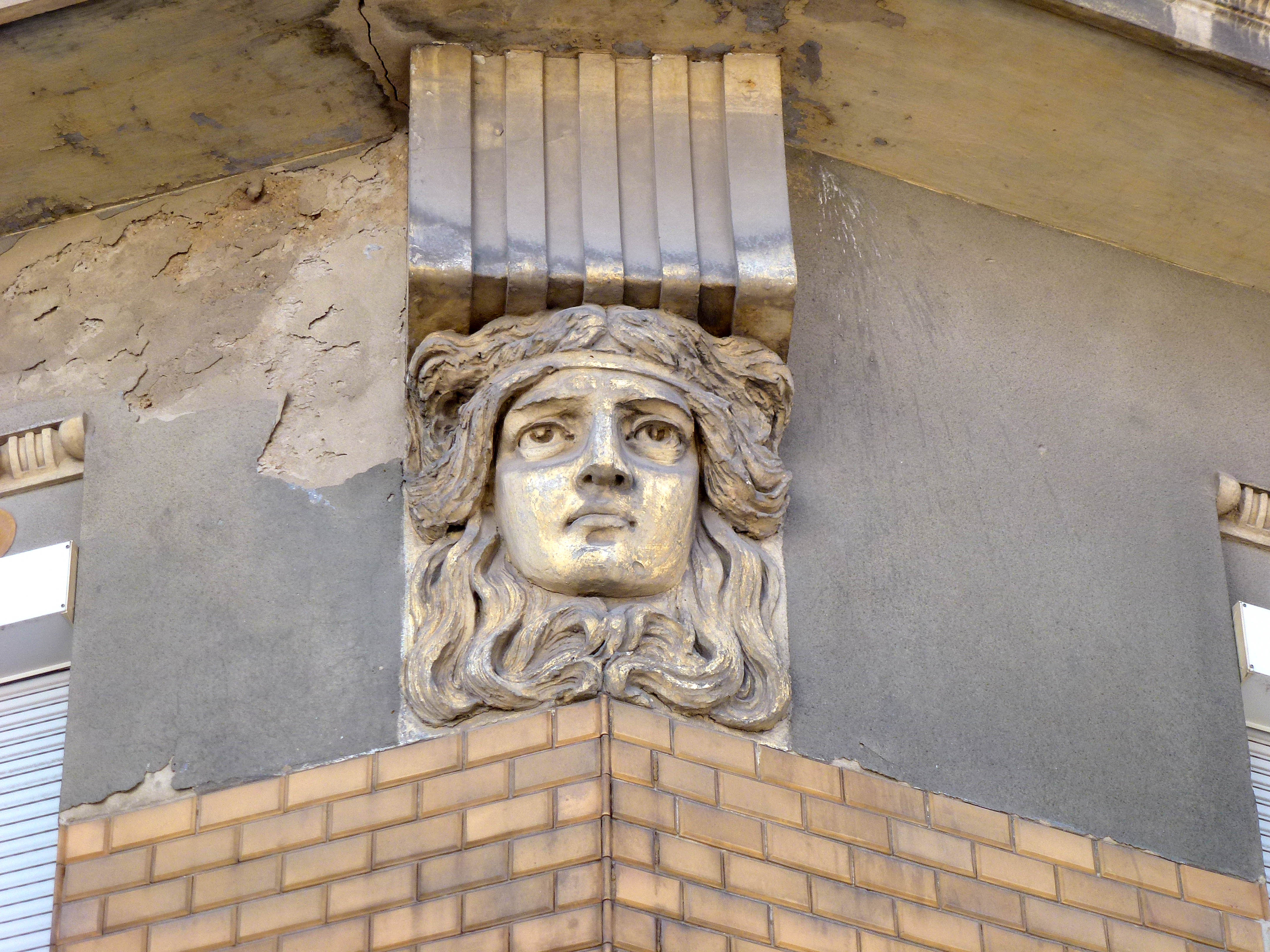
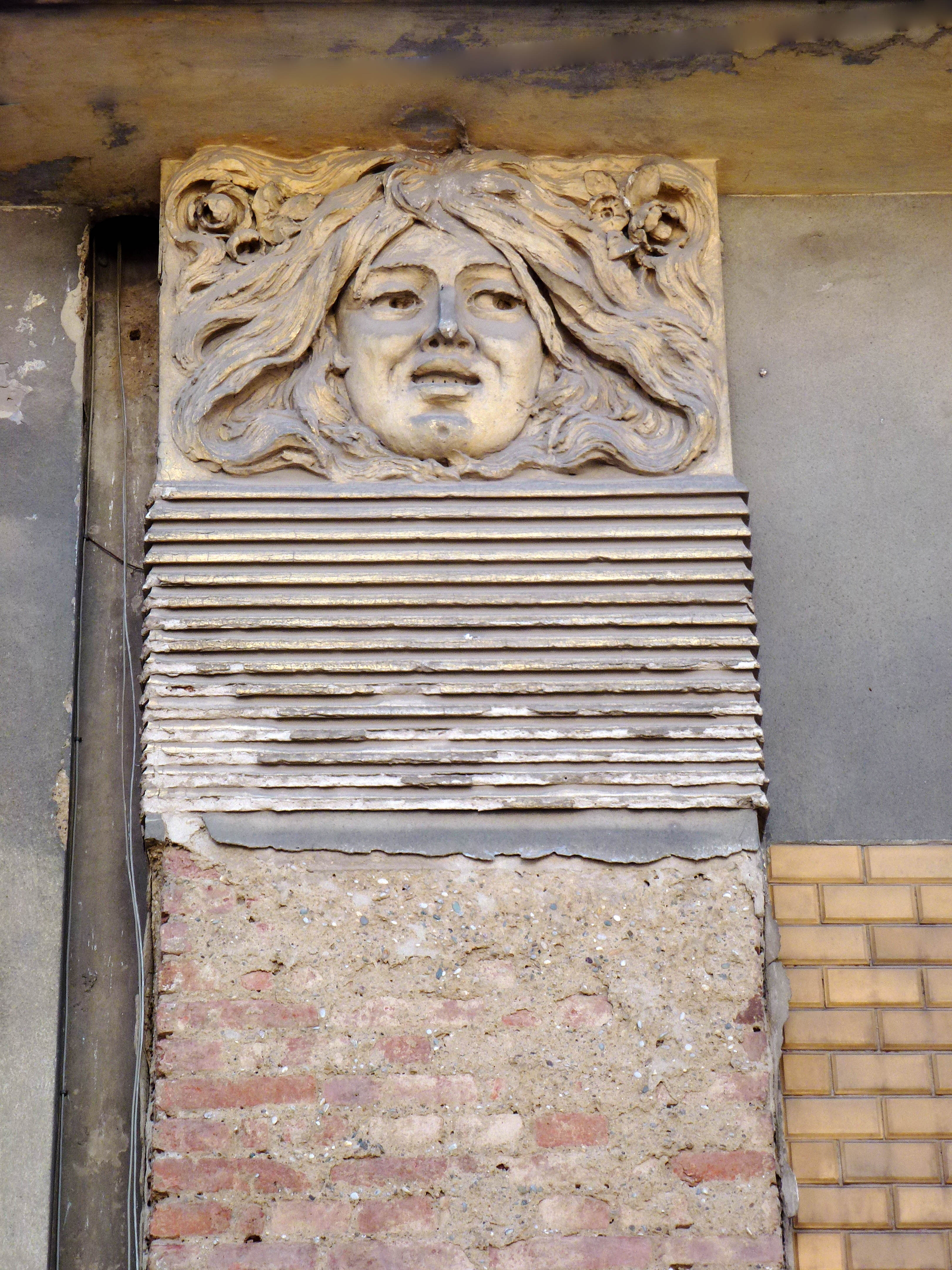
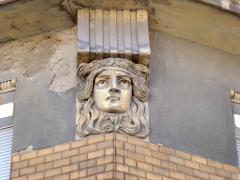
The stucco and other ornamentation attract attention with the diversity of the typical Art Nouveau vegetable, geometrical and anthropomorphic motifs. The architect emphasised the door and window openings with horizontal bands of yellow ceramic tiles. There are decorative bands above the openings that are reminiscent of astragals. The windows on the storey are additionally ornated with little medallions above the openings and decorative fields under them. Stylized vegetable ornamentation overflows in the horizontal rectangular fields under the windows. The balcony above the western entrance receives special attention with its decoratively designed fence and consoles in the shape of petals arranged in a fan. Two lesenes with stylized acanthus leaves are decoratively designed above the balcony and under the cornice. The exterior pilasters of the side projections are adorned with rectangular surfaces under the cornice; undulating sunflowers are depicted on the surface. The most outstanding decorative elements on the façades are female faces made from stucco, which emphasise the truncated corner of the building or the central shallow projection. They were cast with the help of three moulds of different shapes and sizes. The flat faces with the typical Art Nouveau vegetable hair decoration are placed on the side pilasters of the projection instead of the capitals. The second type of female face, which is distinctly voluminous, supports the cornice on the corners of the truncated part of the building as a console would. The third type of female face appears on the segmentally designed roof pediment, also on the truncated corner. The female face with a scary grimace is inserted as a keystone above the large semi-circular glazed lunette. The upper part of the lunette is emphasised not only with the face but also with an oversized astragal.
Polona Vidmar
(29 September 2014)