THE BLACK TOWER (ALSO KNOWN AS THE ČELIGI, TORTURE OR GAMBRINUS TOWER)
Location: between the blocks of flats on Gregorčičeva ulica 29 and 37 (on the northern part of the former town wall)
Architect: unknown
Time of construction: ca. 1460
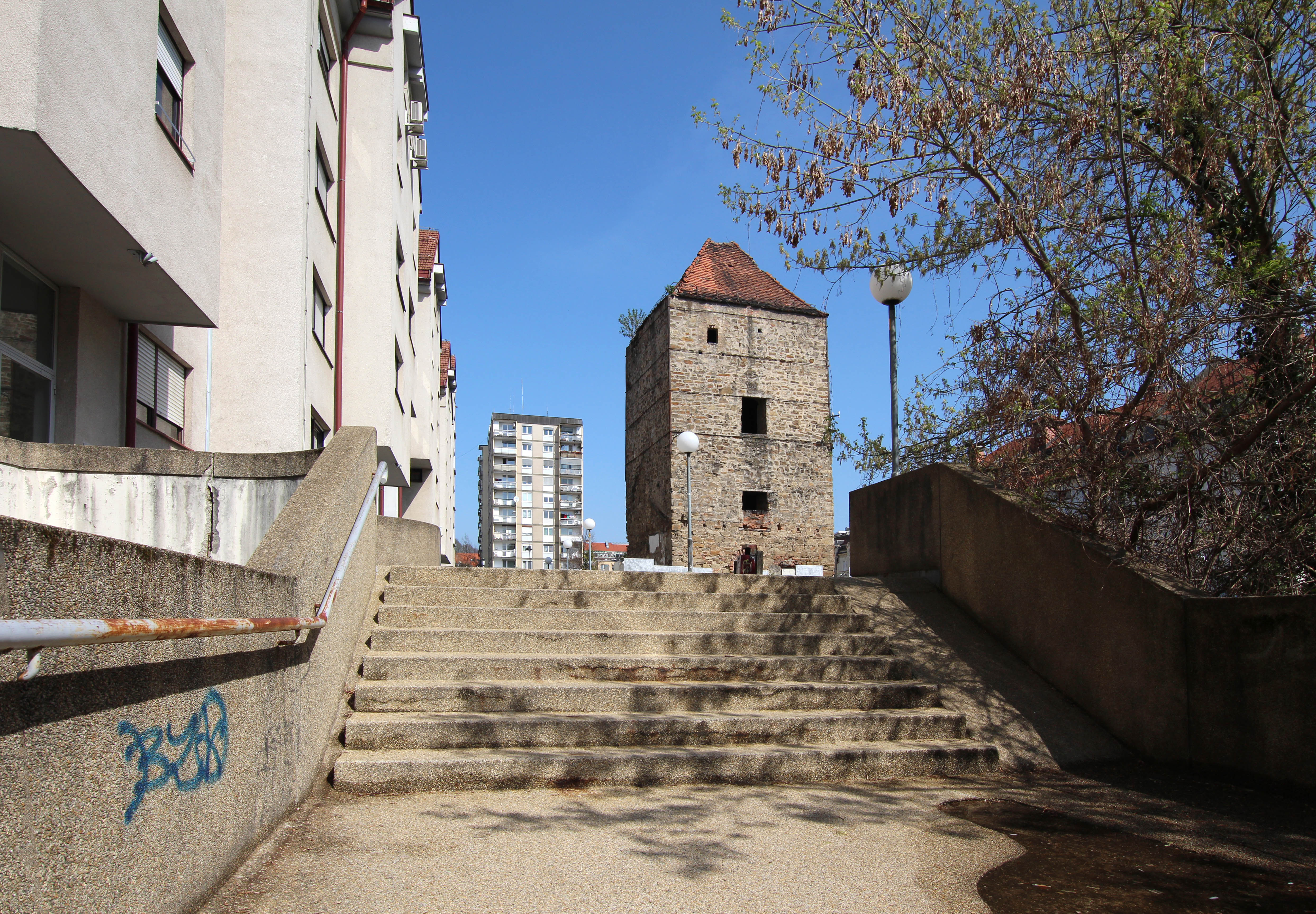
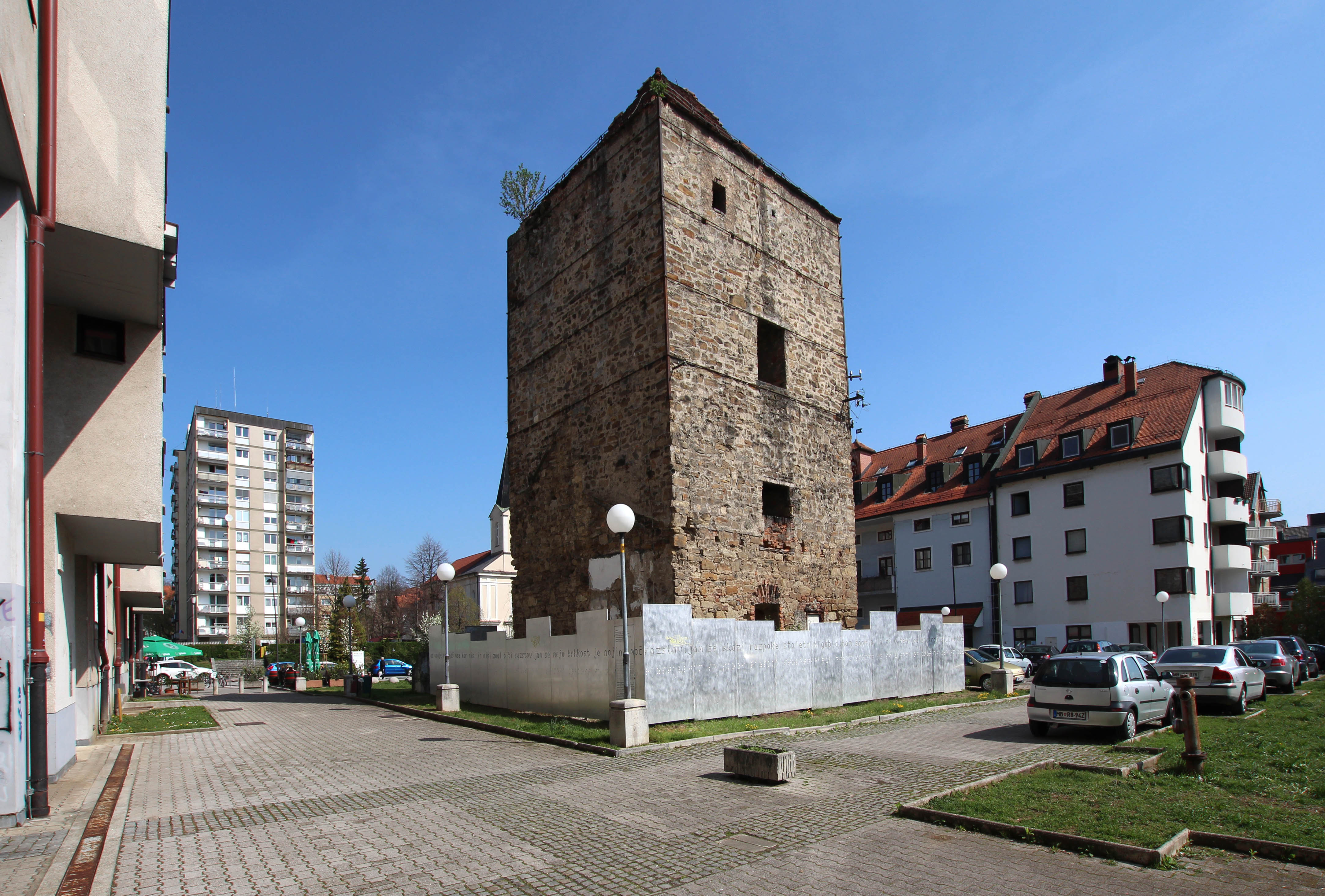
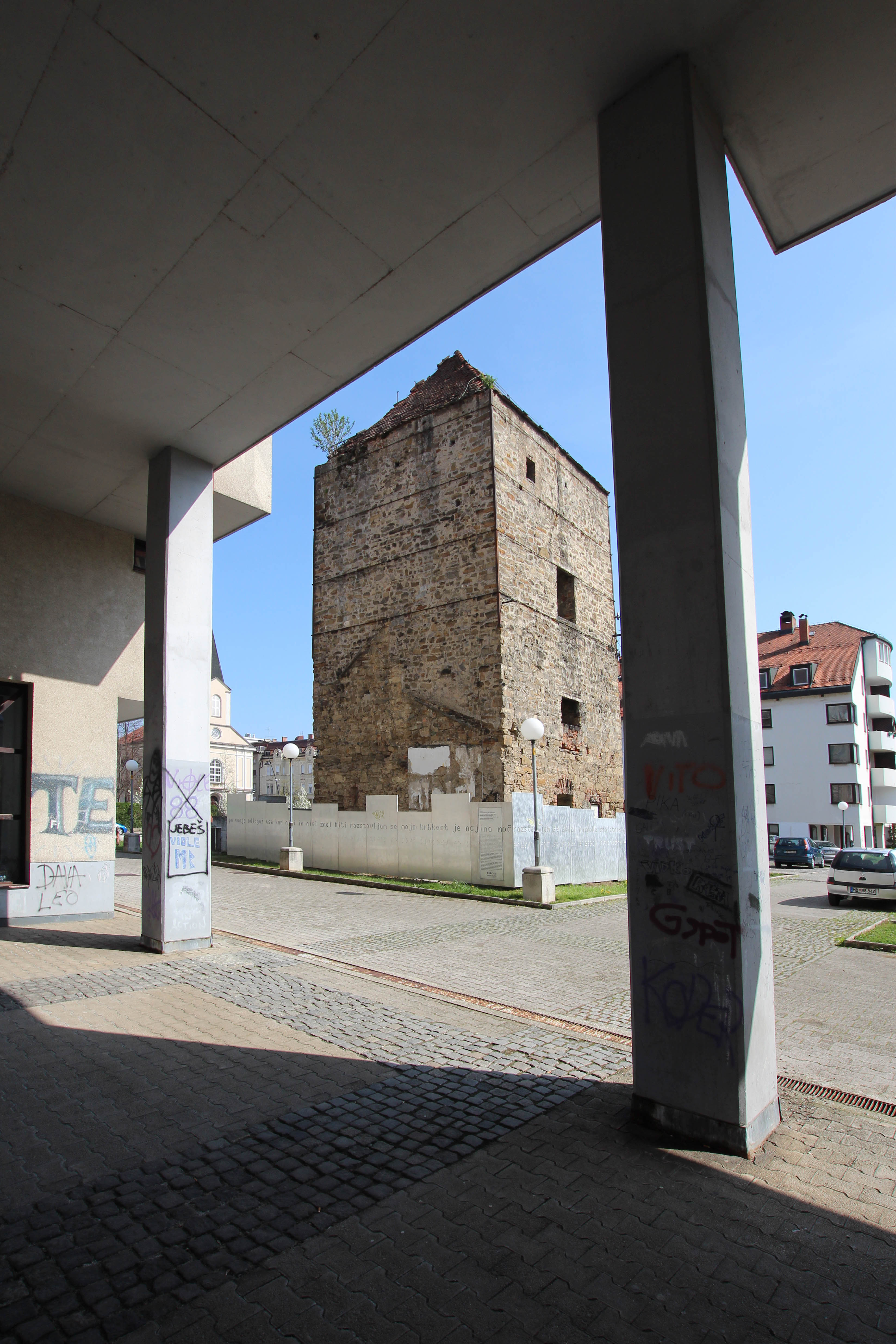
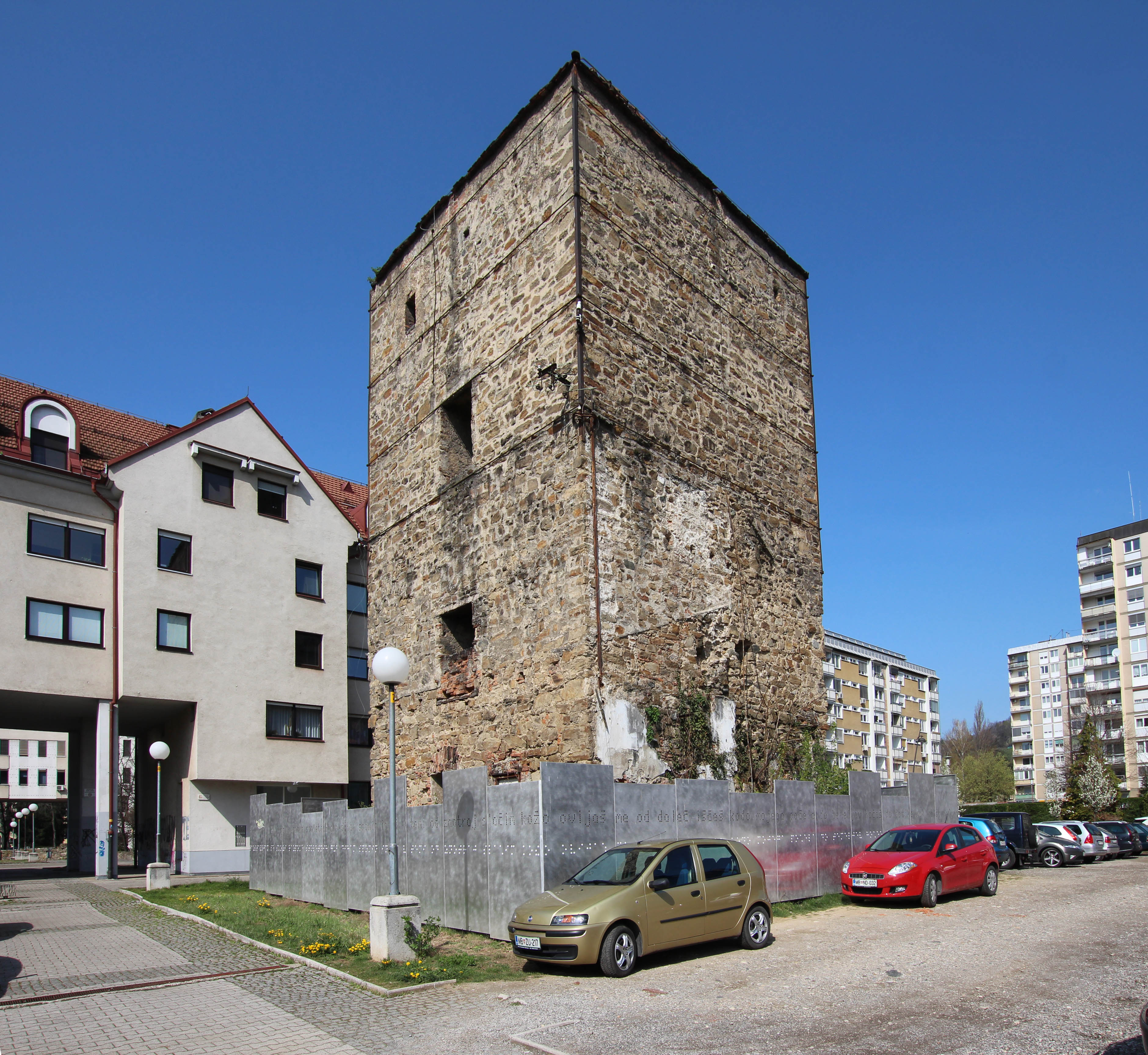
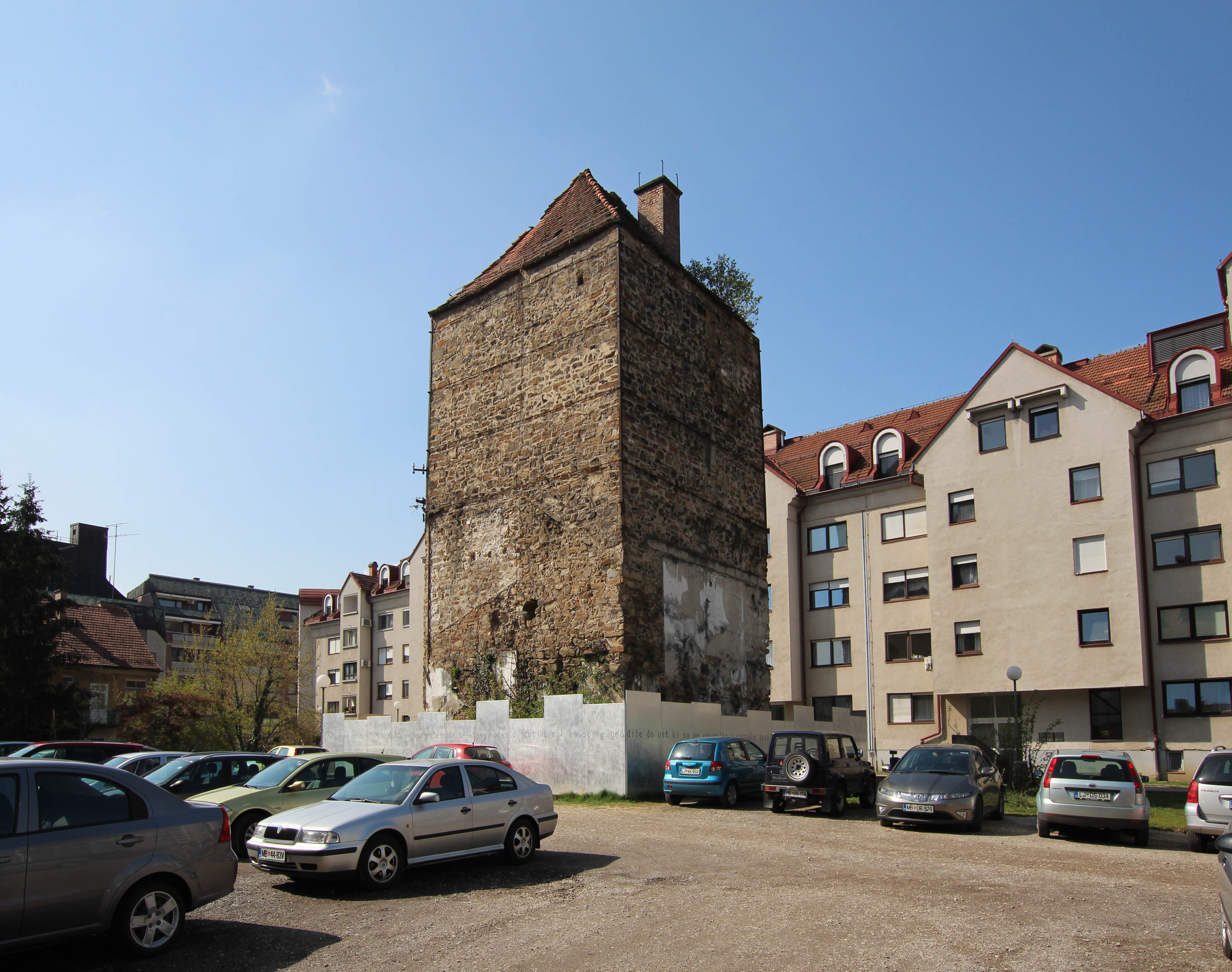
The Black Tower, also known as the Čeligi Tower, named after the Maribor brewers Tscheligi (Čeligi), is the only preserved defence tower of Maribor's northern town wall.
The town wall was built between 1255 and 1275, soon after Maribor obtained town privileges. The new town wall with approximately 500 m long sides in the shape of a rectangular delineated 25 hectares of land between the Drava River and the present day Strossmayerjeva ulica, Gregorčičeva ulica and Ulica škofa Maksimilijana Držečnika streets. The primary town wall was approximately eight to ten meters high and one meter wide. At the top it was articulated with battlements and merlons, and on the inside, there was a covered wooden connecting corridor. In the 13th century, the town wall did not yet have towers; they were built during various construction phases from the 14th century onwards.
During the first large renovation of the medieval town wall, documented between 1460 and 1470, when Turkish invasions threatened the town, a number (supposedly six) of defence towers were built in accordance with concurrent defence guidelines. The towers were built on the northern side and the southeastern corner of the town wall, the places that were most exposed to enemy invasions. Today, only the Jewish Tower on the southeastern corner and the Black Tower on the extreme western part of the former northern side of the town wall are preserved. At the same time as the construction of the new defence towers, the town gates were reconstructed and the town moat deepened, which was filled with water from nearby streams. On the northeastern corner of the town wall, they built a completely new town castle.
Even though the Black Tower was later reconstructed numerous times, its original appearance from the second half of the 15th century is still relatively well preserved. The simple medieval defence tower, built on a square ground plan, was covered with a steep hipped roof. Its roughly built stone exterior is divided into four levels, which are articulated by larger rectangular openings on the ground floor and in the two storeys (on the level of the former connecting corridors), and on the upper storey by a small window slit, which was reconstructed. Old photographs, taken before the last renovations, indicate that at first the exterior of the tower was probably surrounded by a defence gallery approximately three meters high. Presumably, a small window of the reconstructed entrance on the upper storey provided access to this gallery. The Black Tower is important especially because of its well-preserved interior with a wooden ceiling and floor constructions.
In the 18th century, a brewery operated in the Black Tower. It was owned by the Tscheligi (Čeligi) family, after whom the tower was also named as the Tscheligi (Čeligi) Tower. The tower was named the Black Tower when it was owned by the Talis company and used as a coal storage for many years.
Part of the town wall near the Black Tower was preserved until 1990, when an investor demolished the last remnants of the western part of the northern town wall during the construction of apartment buildings. The area around the tower remained disordered and still awaits a proper presentation, which would give the tower its place in the area and renew at least a part of its former value.
Tina Košak
(25 September 2014)