THE PRISON
Location: Pobreška cesta 20
Architect: R. von Neubauer
Time of construction: 1884-1889
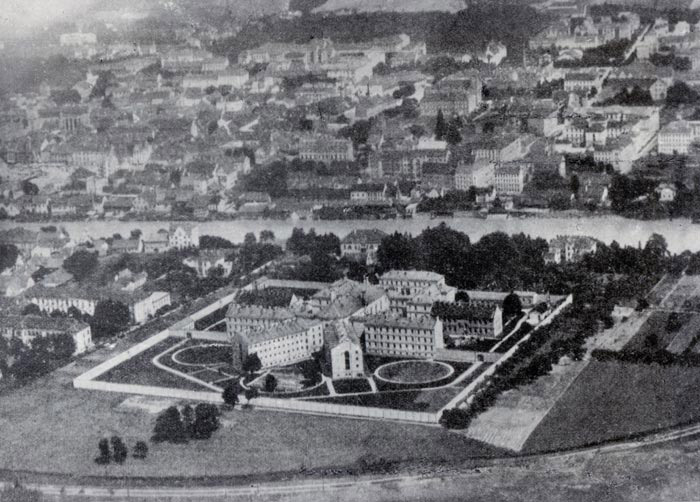
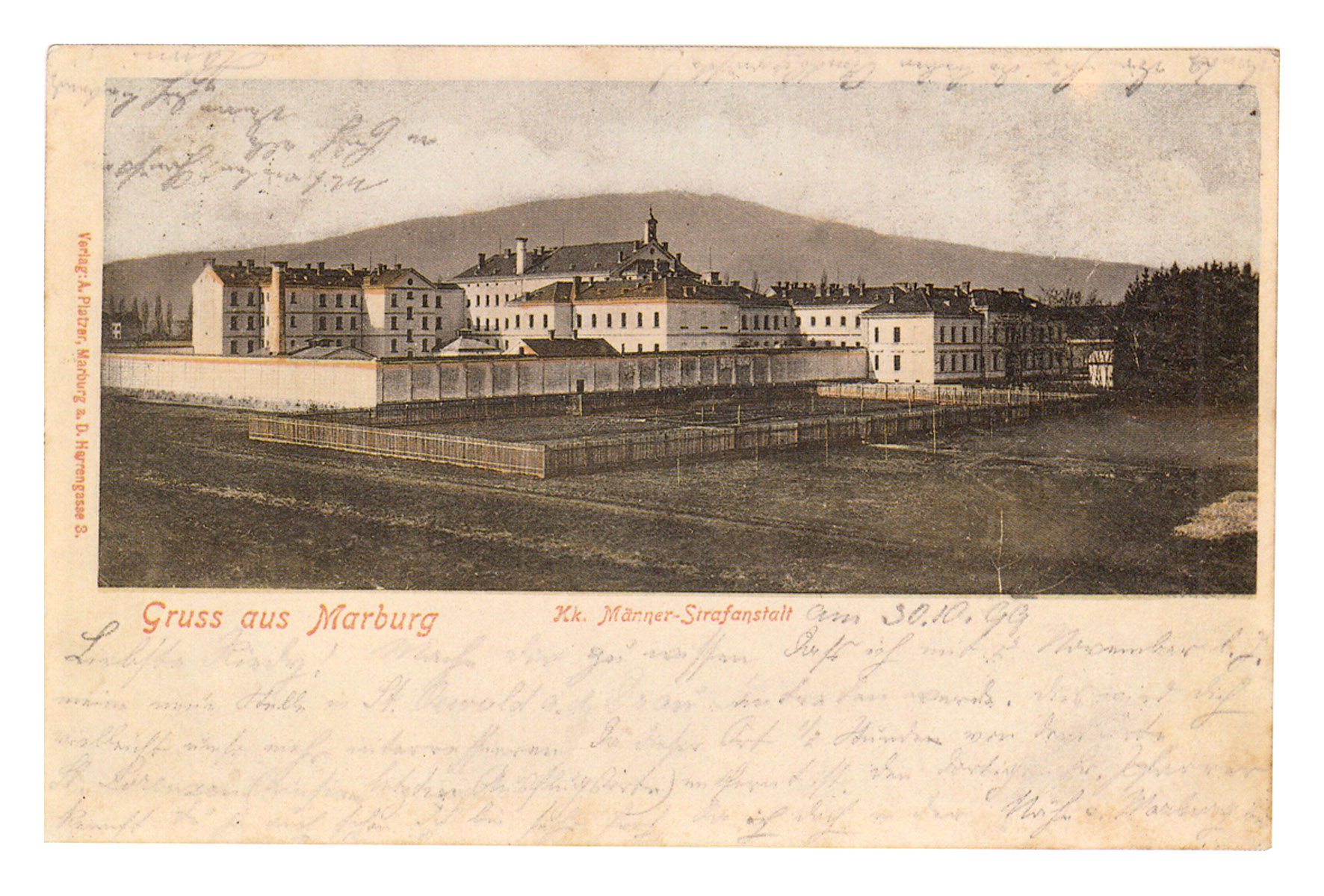
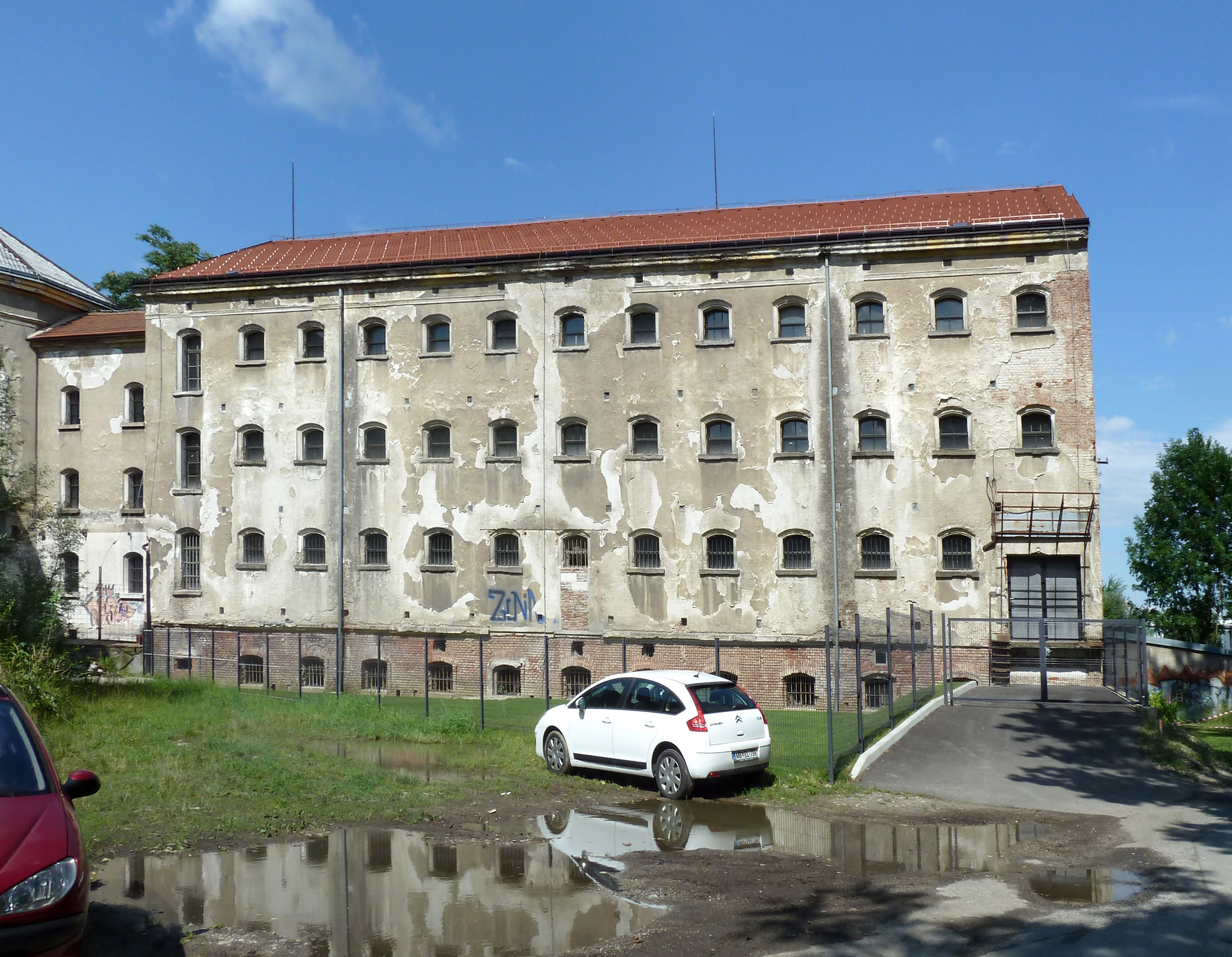
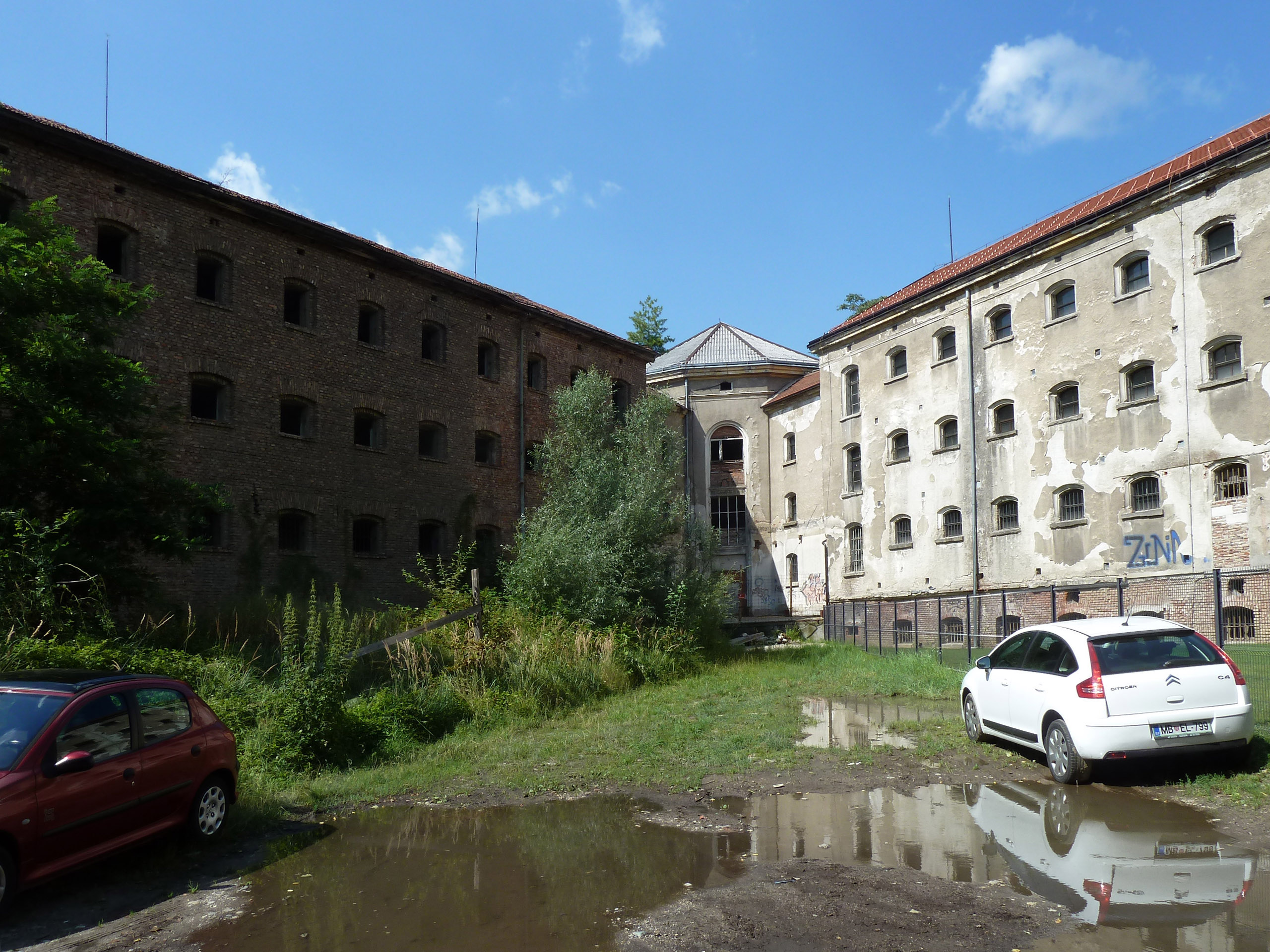
The construction of the former Imperial-Royal prison for men, commissioned by the Ministry of Justice, was based on the plans of engineer R. von Neubauer between 1884 and 1889. The head of construction was chief engineer Franz Maurus from Graz. The relatively large building was placed on the undeveloped right riverbank of the Drava River, in the area between the old (then the State Bridge) and the Railway Bridge. The prison was designed in the shape of a star, which was typical for the prisons of that time. There were also Catholic and Orthodox chapels in the central wing. Five large and three small four-storey wings with prison cells were derived from the south part of the central wing. There was room for 542 prisoners in the building. When construction was completed, the building was considered the most modern prison building in the Austro-Hungarian Monarchy and served as a model for other similar buildings. During the Allied bombings in the last years of the Second World War (1944-45), the building was partially destroyed. After the war, the southwest wing was reconstructed, while both east wings (the central and the side) were demolished. From 1963, when the prisons were relocated from Maribor to Dob in Mirnska dolina, the building was used for storage and as business premises. The cell in which Josip Broz 13 Tito was imprisoned was organized into a museum. After the wall was demolished and the garden abandoned, the surrounding area began to degrade. The situation worsened after 2000, when the Europark. shopping centre was constructed. Today, the former Prison is empty and deteriorating.
The Prison was once surrounded by walls with a geometrically shaped garden. The central wing, which ran in the direction north to south and had a polygonal end-section on the south side, represented the base of the complex. Its form was derived from church presbyteries. The rectangular four-storey wings with cells (ground floor + three storeys) were derived from the central wing and were connected to it through a narrow passage. On the north side, the central part and the entrance wing, which was leaning on the prison walls, converged.
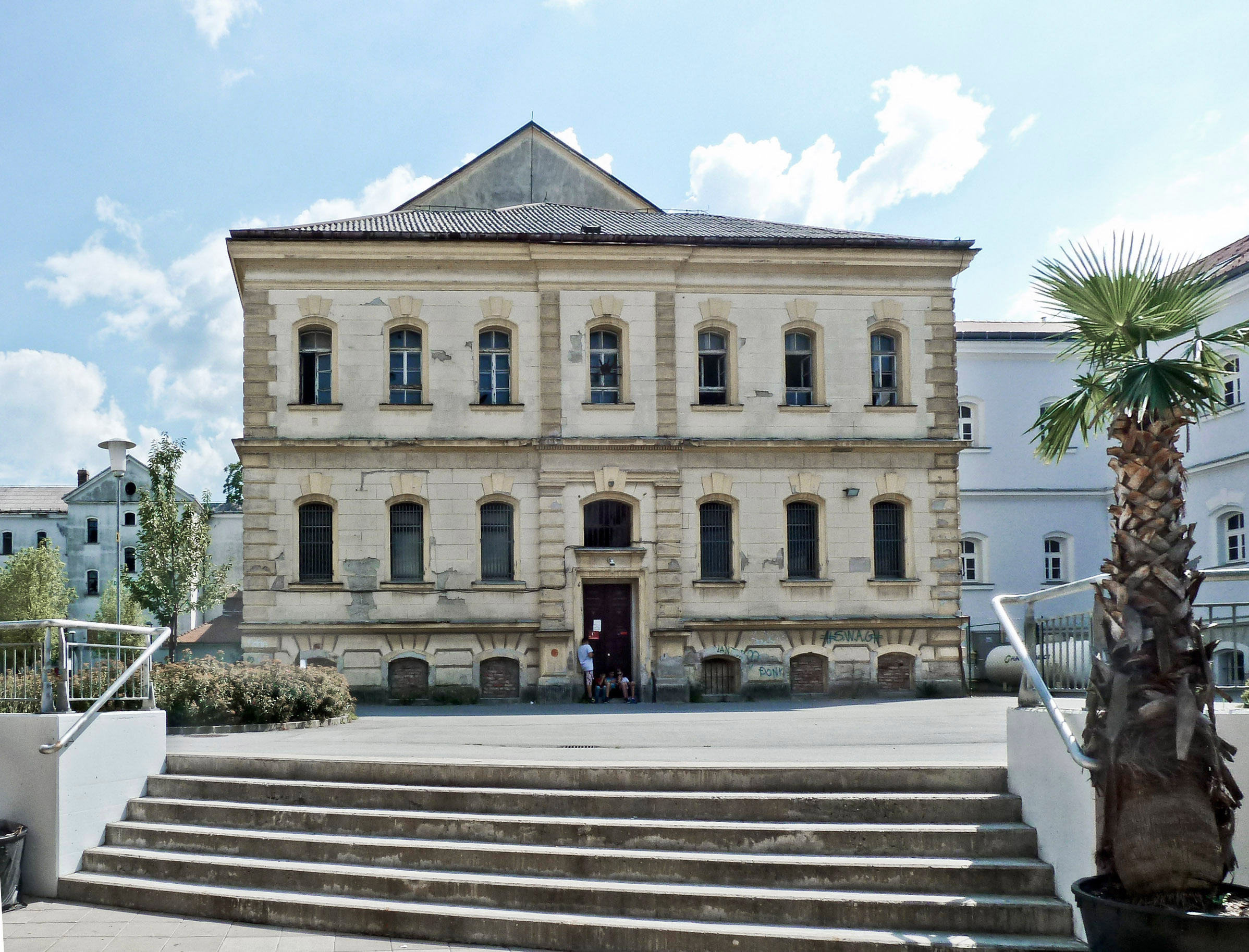
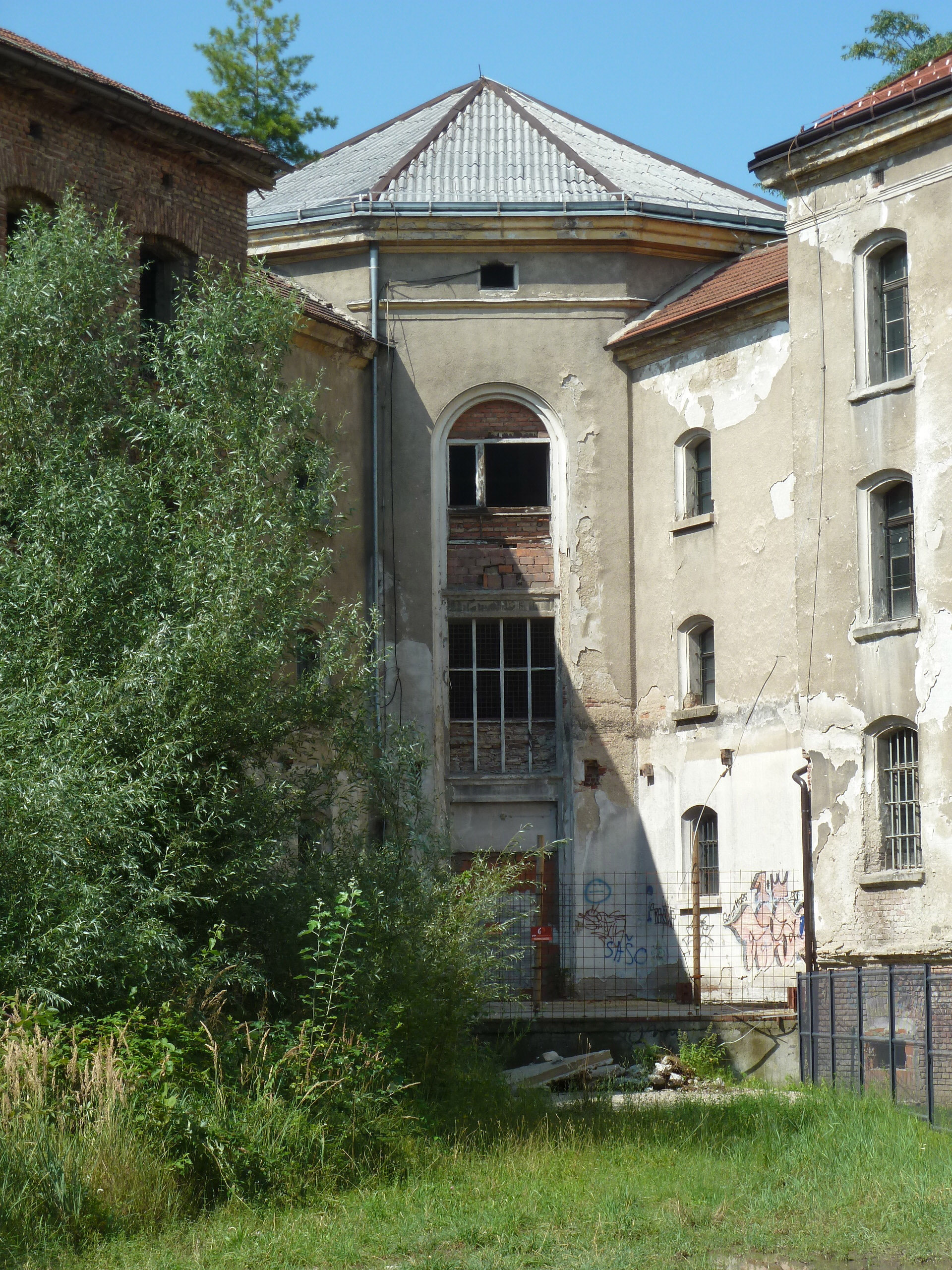
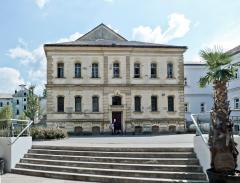
Apart from the entrance wing in Neo-Renaissance style, which is divided by segmental windows and rustication, quoins, rusticated lesenes and Tuscan pilasters, the exterior of the Prison is not architecturally divided. The prison wings have small, segmental windows. The ground floors were divided by rustication, while the storeys had smooth plaster. The polygonal end-section of the central wing is divided by large semi-circular windows.
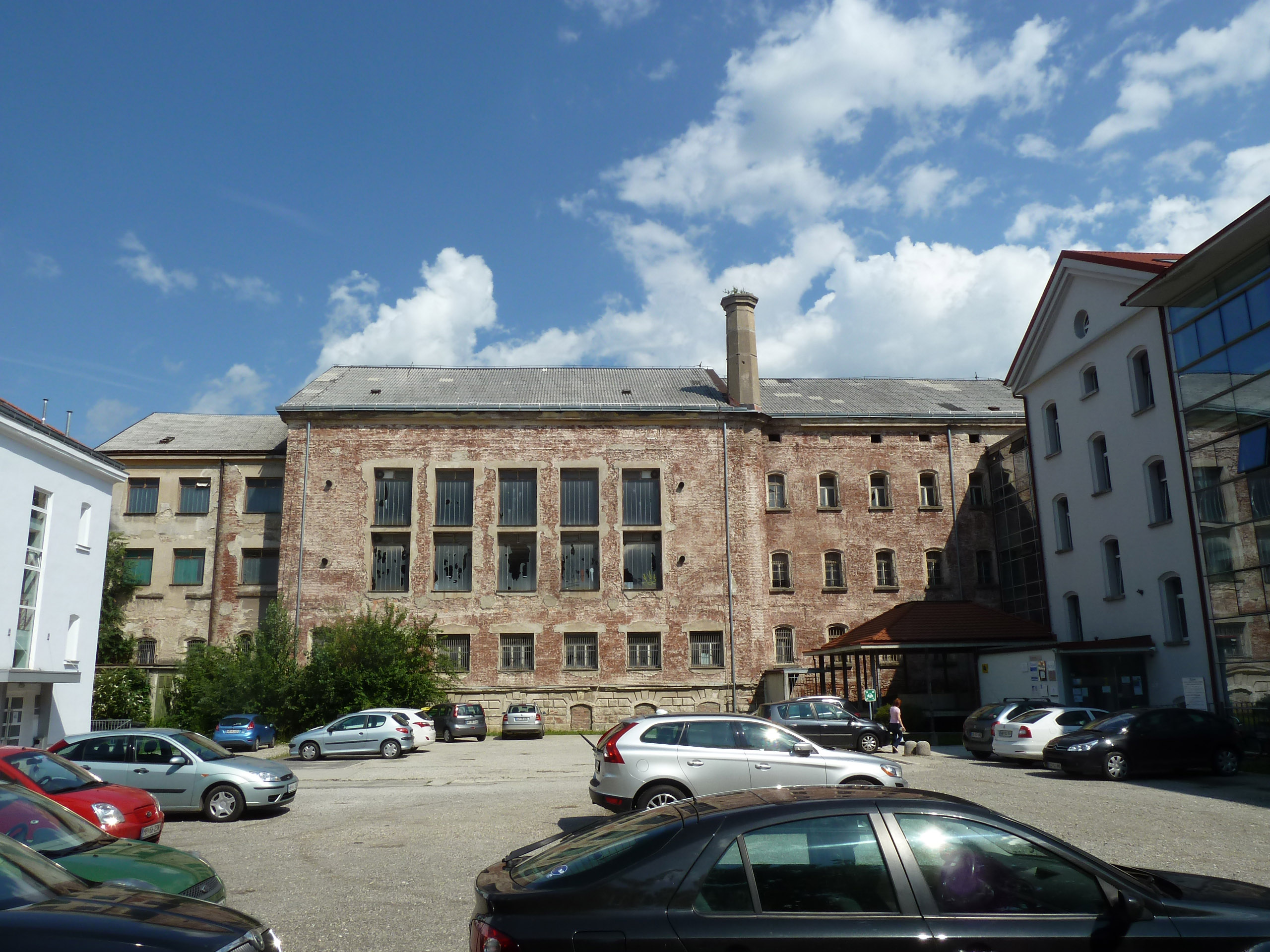
Today, the façade of the administration wing is renovated, while most of the complex is deteriorating. Even though the central and the prison wings still show former division, the plaster is coming off most of the wings, the windows are shattered, etc. Later, some wings were inadequately rebuilt (glass façades).
Despite its disastrous state of preservation, the Maribor Prison represents one of the key prison buildings of the former Austro-Hungarian Monarchy. With its star shape, characteristic for prison buildings in various European cities (in some places it was only an expansion of older buildings) from the end of the 18th until the beginning of the 20th century, it represents an exception in Slovenian architectural heritage. Based on its architectural characteristics it is especially reminiscent of the prison in Karlau in Graz (Johann Schöbl, 1869-1872) and the Stein prison in Krems in Lower Austria (ca. 1875). Among the buildings the Maribor Prison could have influenced is the prison in Lepoglava in Croatia (1908-1914).
Franci Lazarini
(23 September 2014)