The Former Jesuit Collegium with the Church of St. Aloysius
Glavni trg (Main Square) 7
Johann Nepomuk Fuchs
1757-1758, 1767-1769, 1859
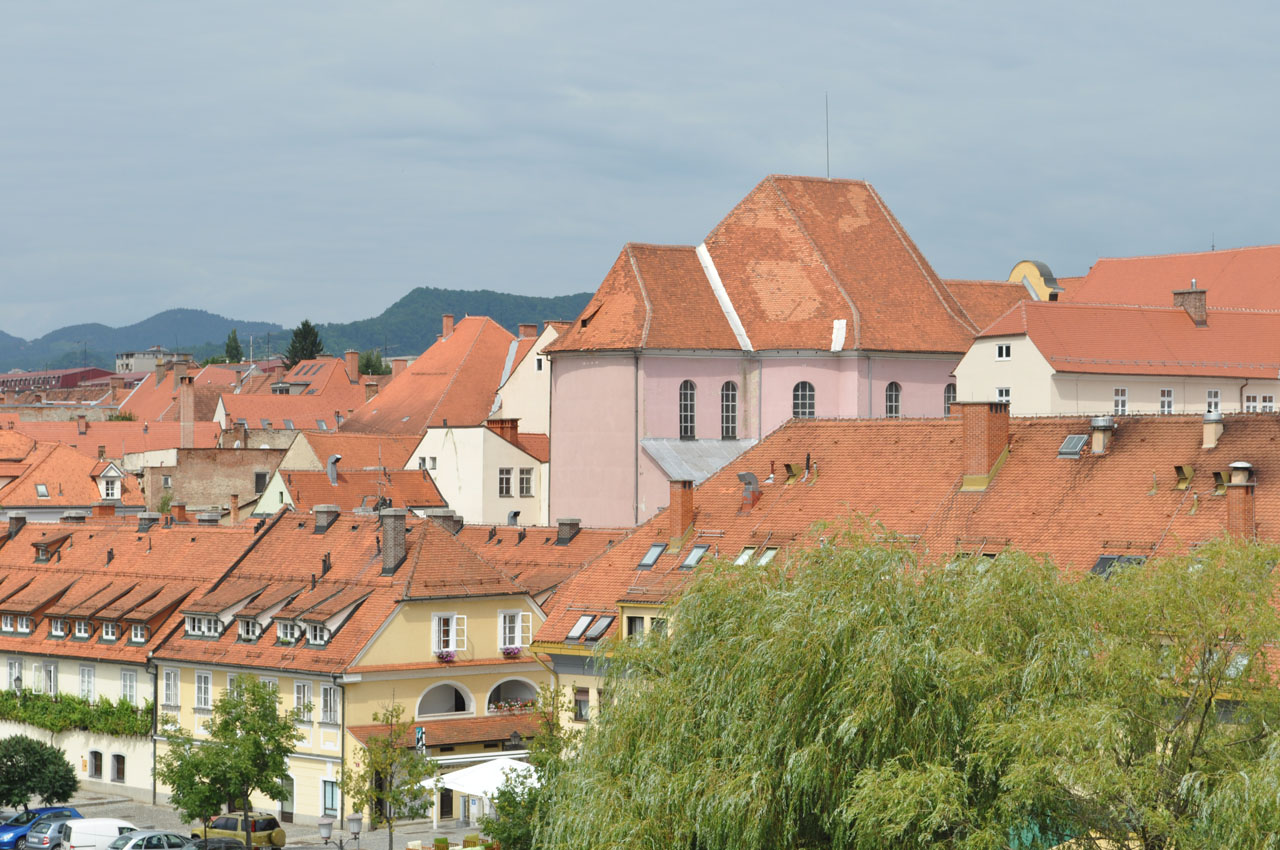
Prince Bishop of Gurk Johann Jakob Baron of Lamberg took the first initiative for the settlement of the Jesuits (Society of Jesus) in Maribor as early as 1621, however, the Collegium was not established then. It was not until 1774 that the heritage of the deceased Jesuit Adalbert Count of Purgstall, who died in Vienna, created the financial basis for the establishment of a monastery in Maribor. Even before their arrival in 1757, the Jesuits bought six houses on Glavni trg (Main Square) and Splavarska ulica; there, they built the Collegium and a high school (1758), while between 1767 and 1769, they also built the Church of St. Aloysius between the two buildings. The money for the construction of the church was donated by Anne Countess of Stubenberg. Maribor architect Johann Nepomuk Fuchs (1727-1804), who came to Maribor from Silesia, made the plans for the entire complex. The Collegium only operated until 1773, when the pope dissolved the Jesuit order; from 1776, the buildings of the Collegium and church served the purposes of the military, while the state grammar school took up residence in the high school building. Between 1831 and 1859, the military part of the complex gradually came into the possession of the Lavantine Diocese, while it only obtained the school in 1892. The theological seminary with a boarding school was set up in the former Jesuit buildings (Lavantine Prince Bishop beatified Anton Martin Slomšek established the study of theology in Maribor), while the church was furnished anew, since its Baroque furnishings had been sold. Today, the Regional Archives Maribor reside in the former building of the Collegium (to the left of the church), while the former high school houses the seat of the Archiepiscopal Archives of Maribor and other institutions of the Maribor Archdiocese.
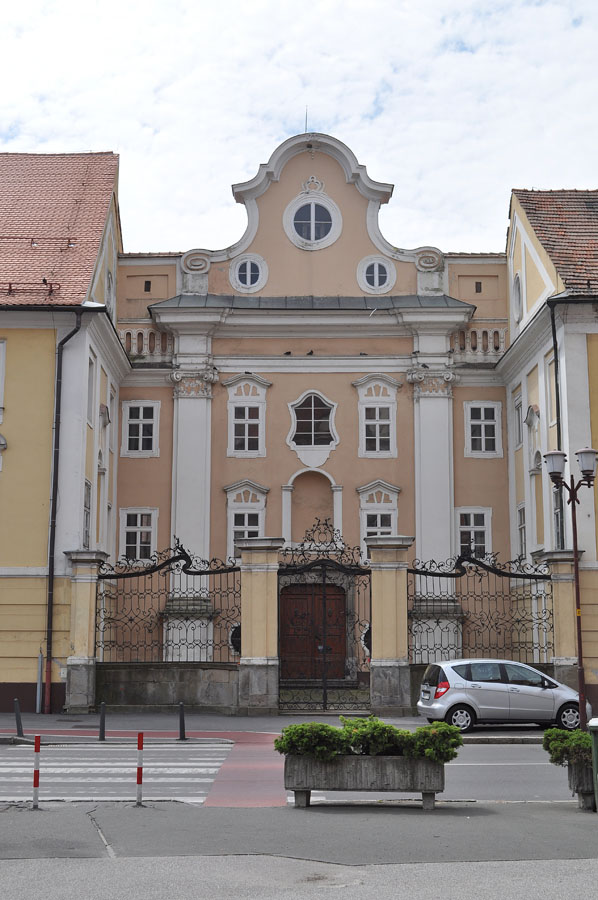
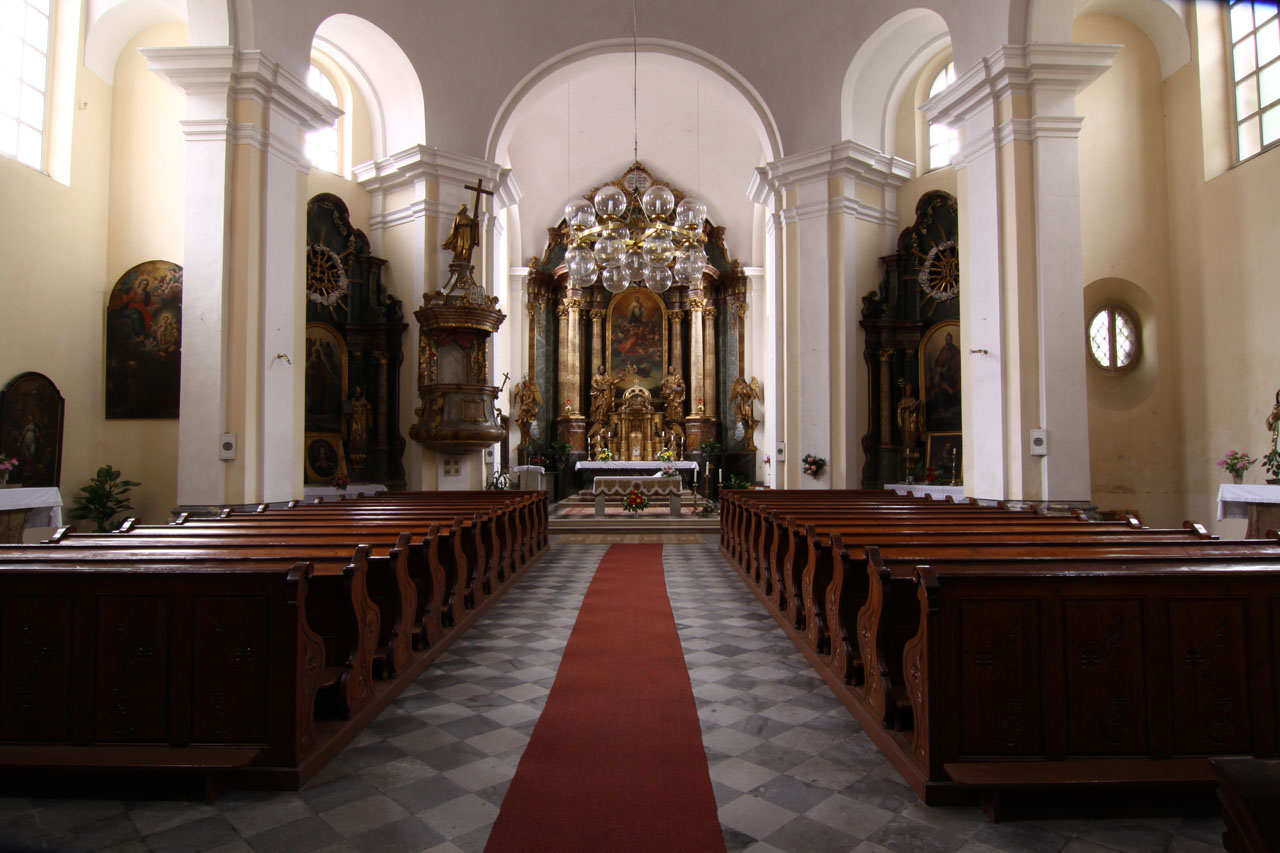
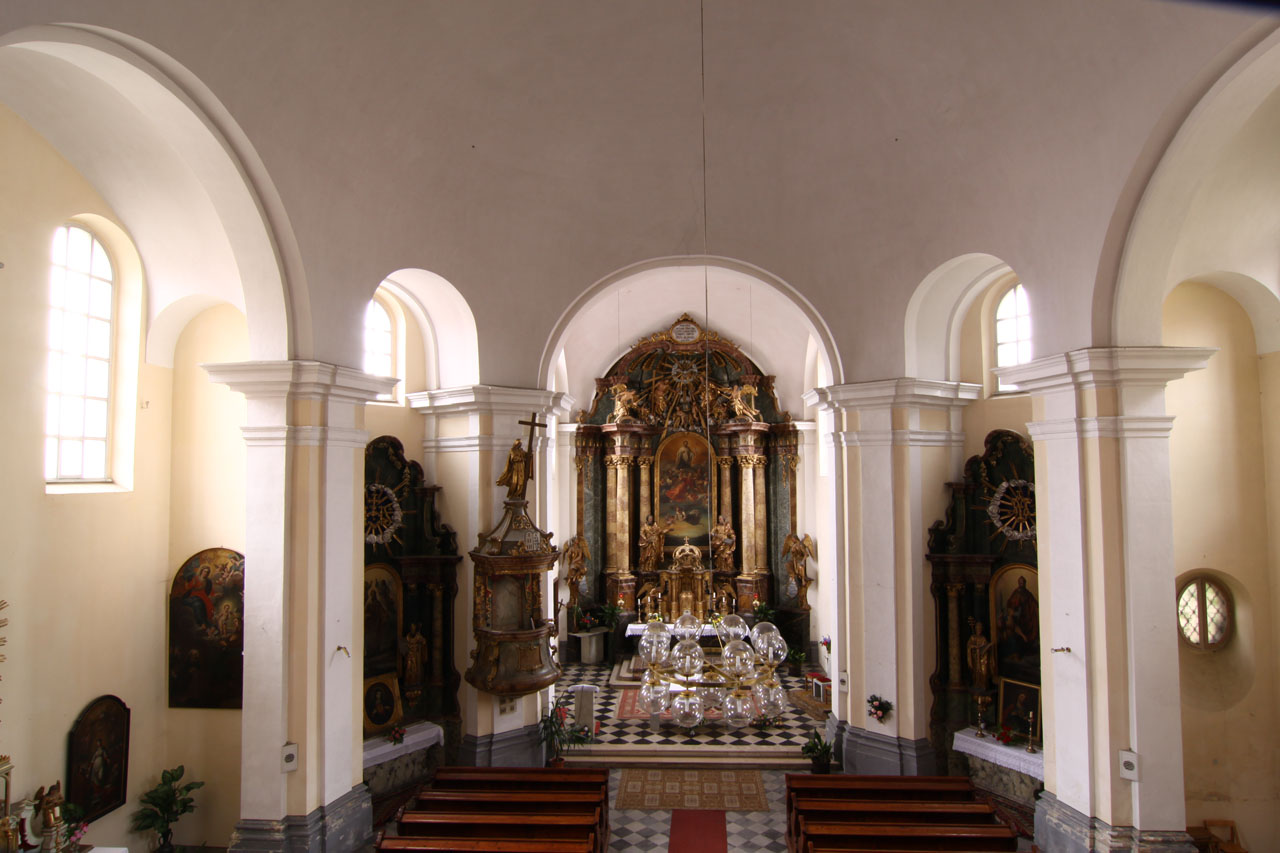
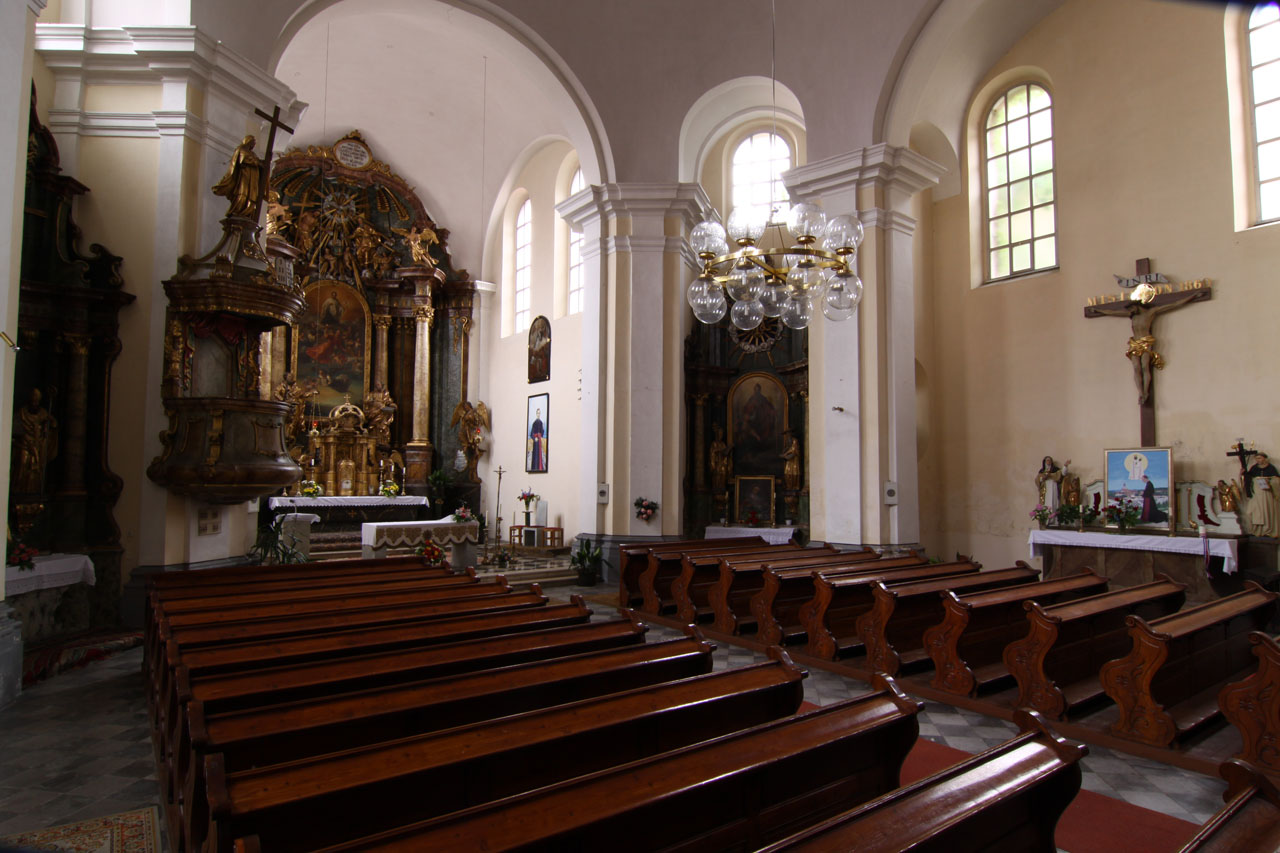
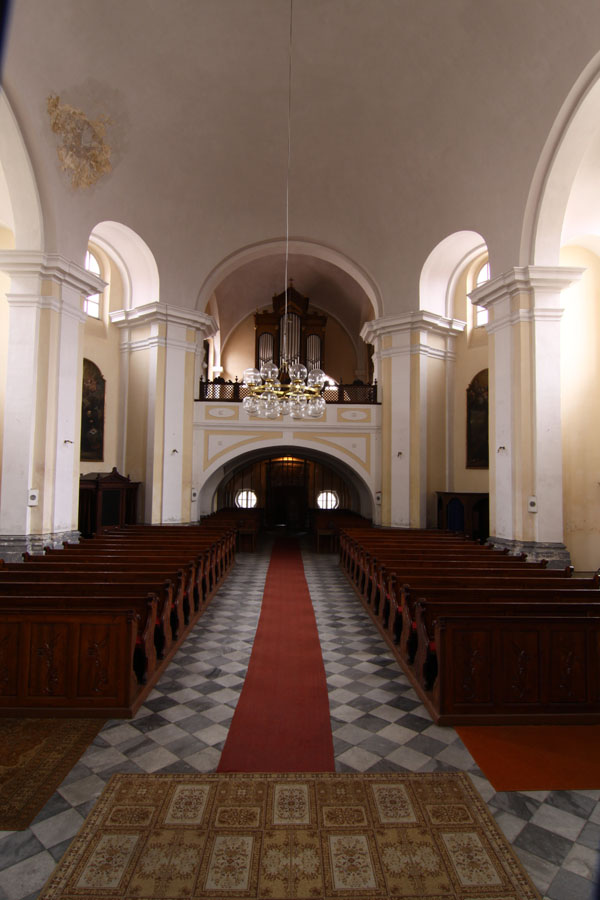
The buildings of the Collegium and the school have two storeys with simple architectural articulation. Between them lies the church, which in its height and décor dominates the two buildings that surround it. The church is moved back slightly from the façade line of the Jesuit complex; a small courtyard enclosed by a Rococo forged fence lies in front of the church. The church has a central ground plan; the main oval place is expanded on the sides by two rectangular chapels. The place is further expanded by four shallow and narrow niches. The organ loft lies on the northern side of the church, while on the south, the space opens into the presbytery with an apse at the end. The latter is surrounded by the sacristy on the eastern side, which was consecrated in 1859.
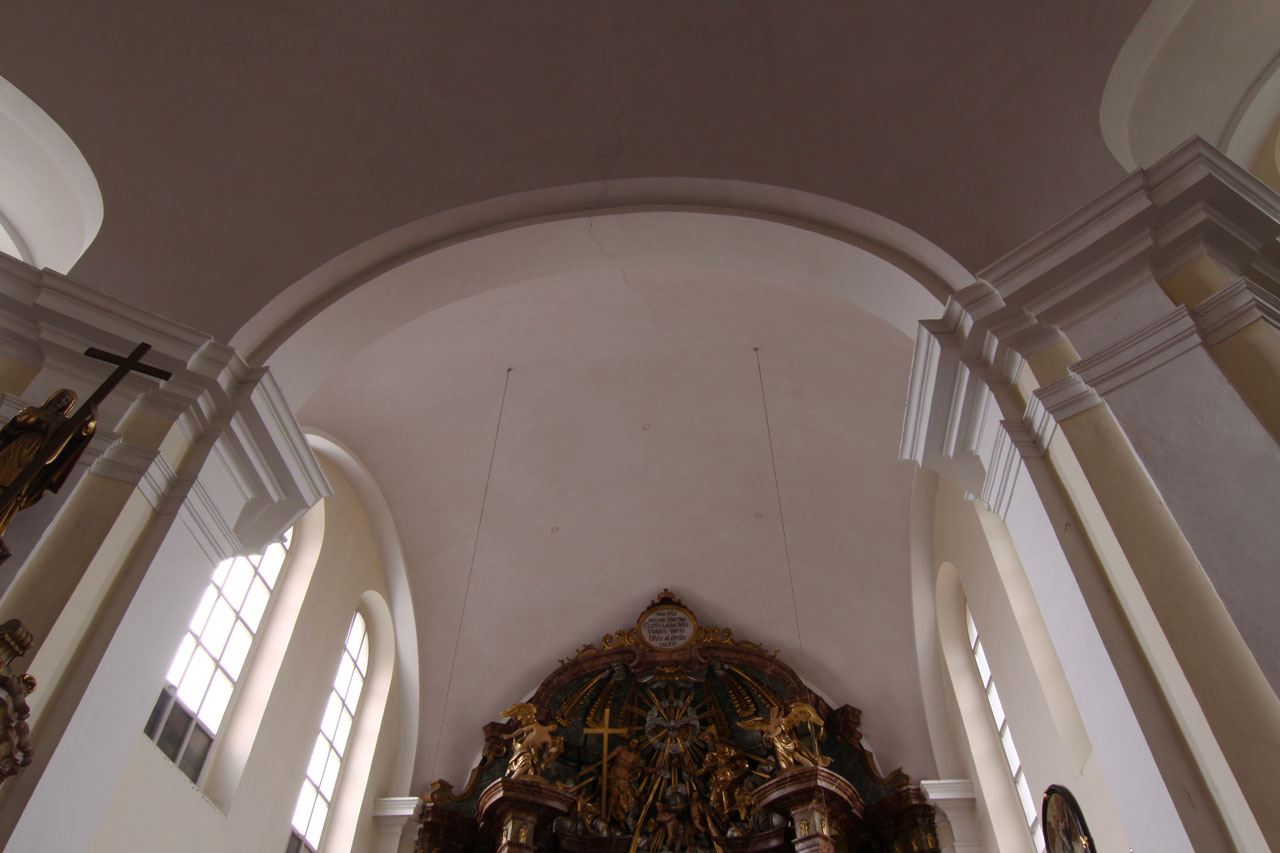
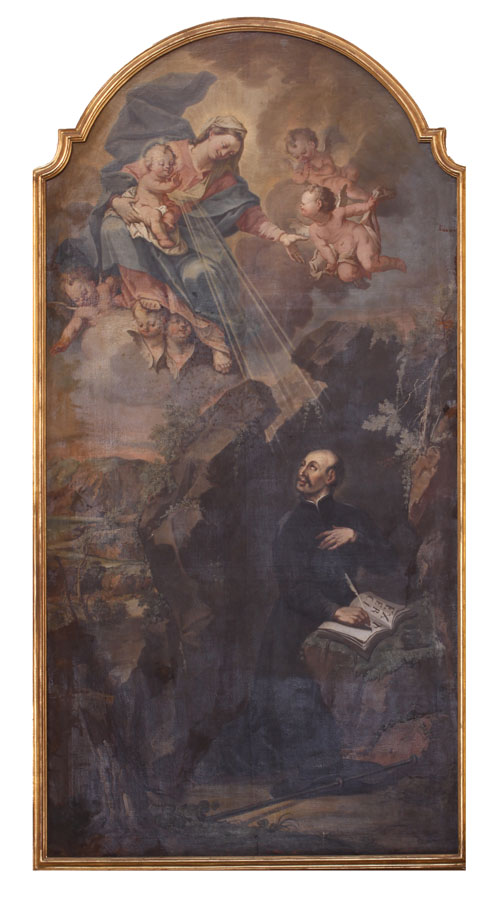
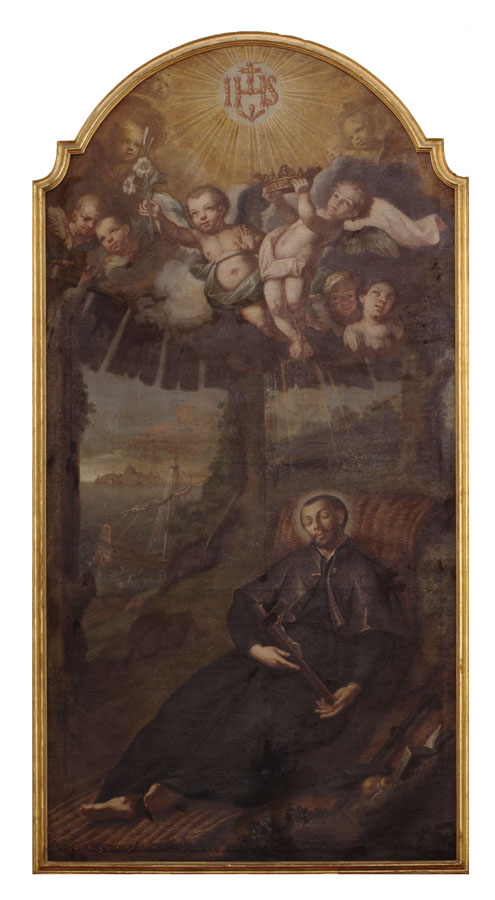
In contrast to the other exterior walls, only the façade has rich architectural articulation (after the Collegium was dissolved, the Late Baroque façade was changed, while in 1982, it was reconstructed to its original condition). It is divided by double colossal pilasters of the Composite order, a portal, a semi-circular niche and diversely shaped windows; above the entablature rises a complexly designed attic with circular windows and volutes. The unpainted interior is divided by pilasters of the Tuscan order, which support the entablature; the nave and the presbytery are vaulted with a Bohemian cap. After the dissolution of the monastery, the original furnishings were sold; only the paintings of the Jesuit saints St. Ignatius of Loyola and Francis Xavier have been preserved. The current furnishings date back to the second half of the 19th century; they were made by painter Josef Tunner from Graz, painter Leopold Kupelwieser from Vienna, sculptor Jakob Gschiel from Graz, sculptor Josef Kainz from Maribor and others.
Franci Lazarini
(19 December 2012)