THE SCHOOL OF ECONOMICS AND COMMERCE
Location: Razlagova ulica 14
Architect: Branko Kocmut (architecture), Miro Zdovc (interior design)
Time of construction: 1960-62
Branko Kocmut (1921-2006), who was one of the most prominent architects in Maribor in the second half of the 20th century, had a great influence on the urbanism in post-war Maribor, which was bombarded by the Allies between 1944 and 1945 and lost a great part of its town. One of the principles of the town's reconstruction was the preservation of the old town centre, where the destroyed parts were filled according to the system of the so-called fillings and adhered strictly to the old gabarits. New buildings were planned on the outskirts of the old town, however, strict rules about the height of new objects applied there as well. The design of the School of Economics and Commerce, the present day Faculty of Economics and Business of the University of Maribor, followed these principles as well. Branko Kocmut planned the building in 1960, while the construction was finished in two years. This was the first new building of the Association of Higher Education Institutions, which became the University of Maribor in 1975. Consequently, the building, which is considered one of the most characteristic modernist buildings in Maribor, also has symbolical meaning in relation to the history of higher education in Maribor.
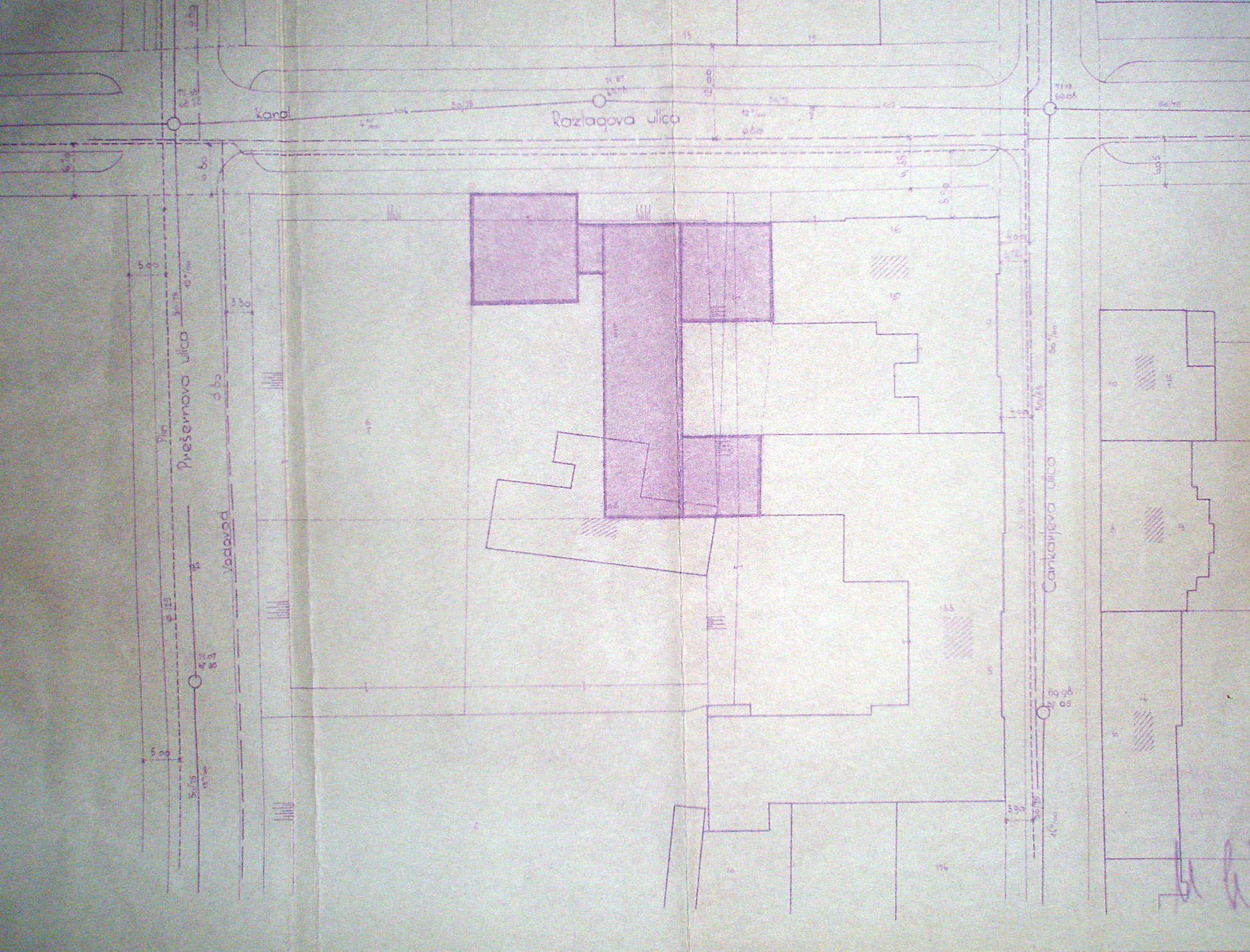
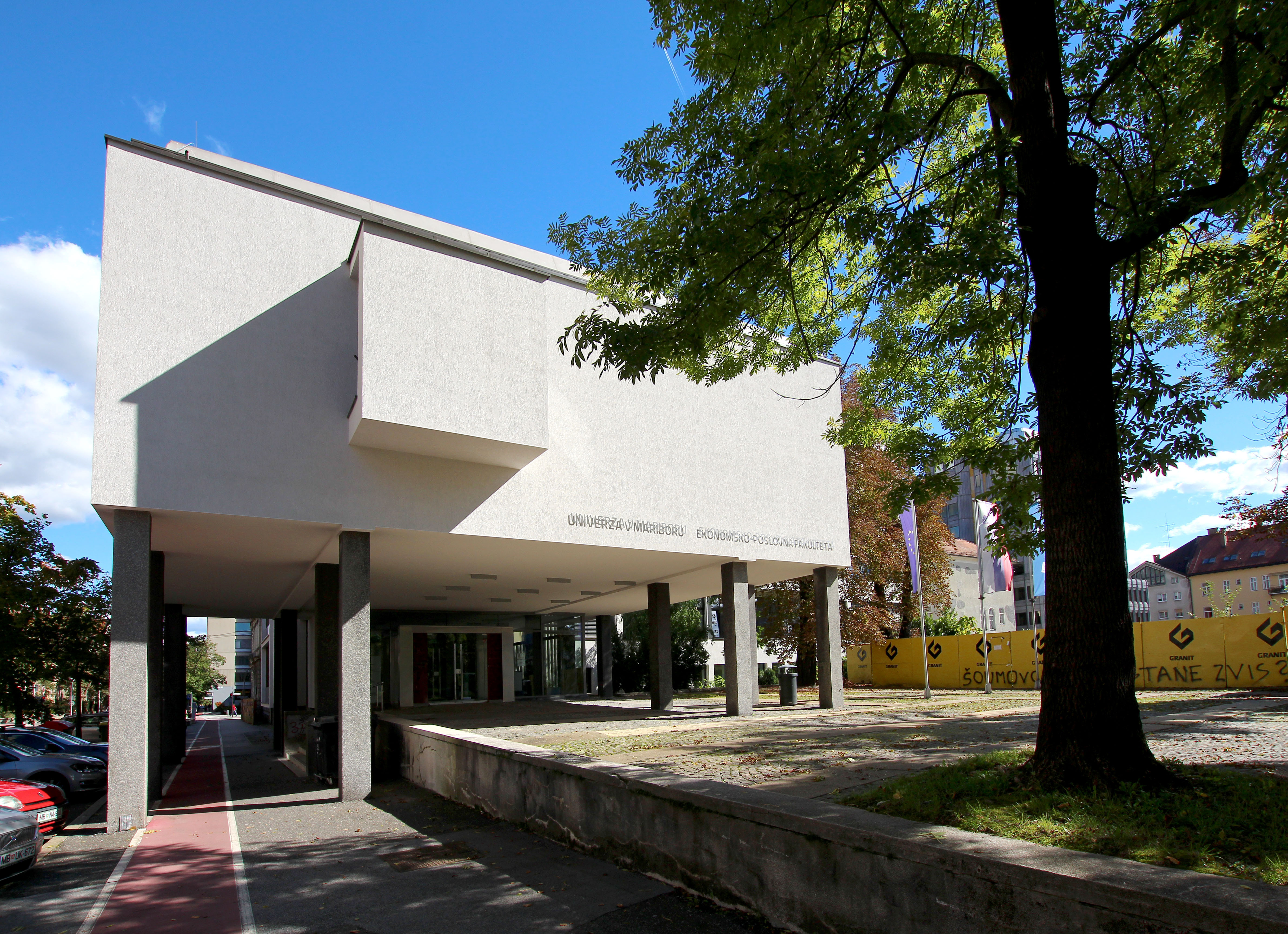
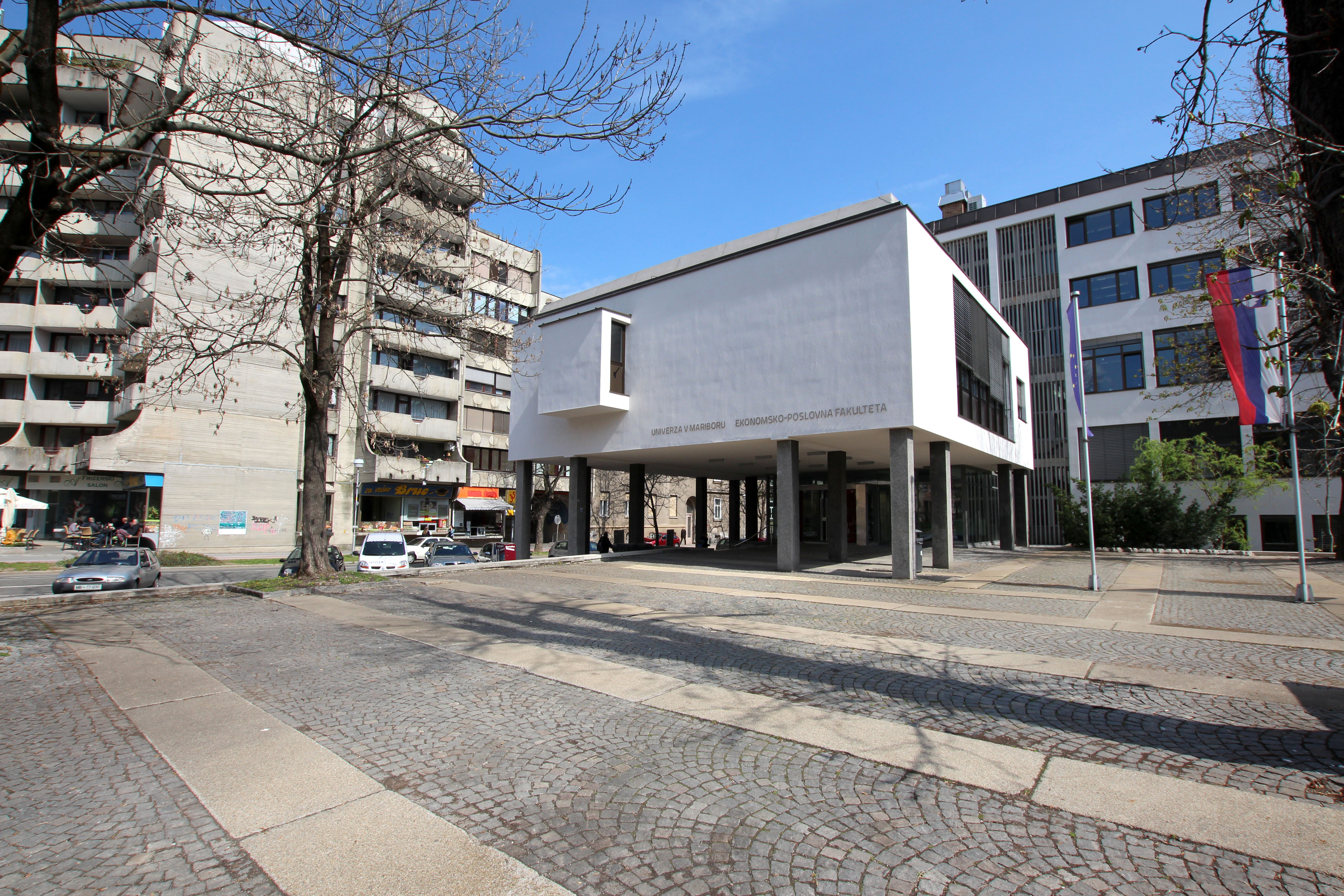
The area designated for the building was on the corner between Prešernova and Razlagova ulica, where until then a bourgeois house with a garden and a kindergarten operating in it had stood. At the beginning of the 1960s, the building was demolished because of the planned construction of the new, higher school building. Kocmut decided to place the building quite far from the street so that a spacious platform was created in front of the building, which, together with the trees, forms a nice ambient for socialization. The architect preserved the original uneven terrain; from Prešernova ulica, we walk to the platform in front of the building over shallow terraces, while from Razlagova ulica, a few stairs lead to the entrance. Kocmut also preserved some of the trees from the former bourgeois garden with which he expressed his susceptible attitude to the former use of the place. The trees somewhat veil the view of the central school building and, especially during the winter, integrate themselves into the structure of the small raster, which is created with the horizontals of the window shades and the verticals of the concrete rod curtains, characteristic of Kocmut.
In 1970, a concrete sculpture by American sculptor Bradford Graves (1939-1998), titled Bridge to Man, was placed on the platform in front of the building in the scope of the international sculpture symposium Forma viva Maribor. Two embraced concrete masses create a joint whole, which in form matches the faculty building.
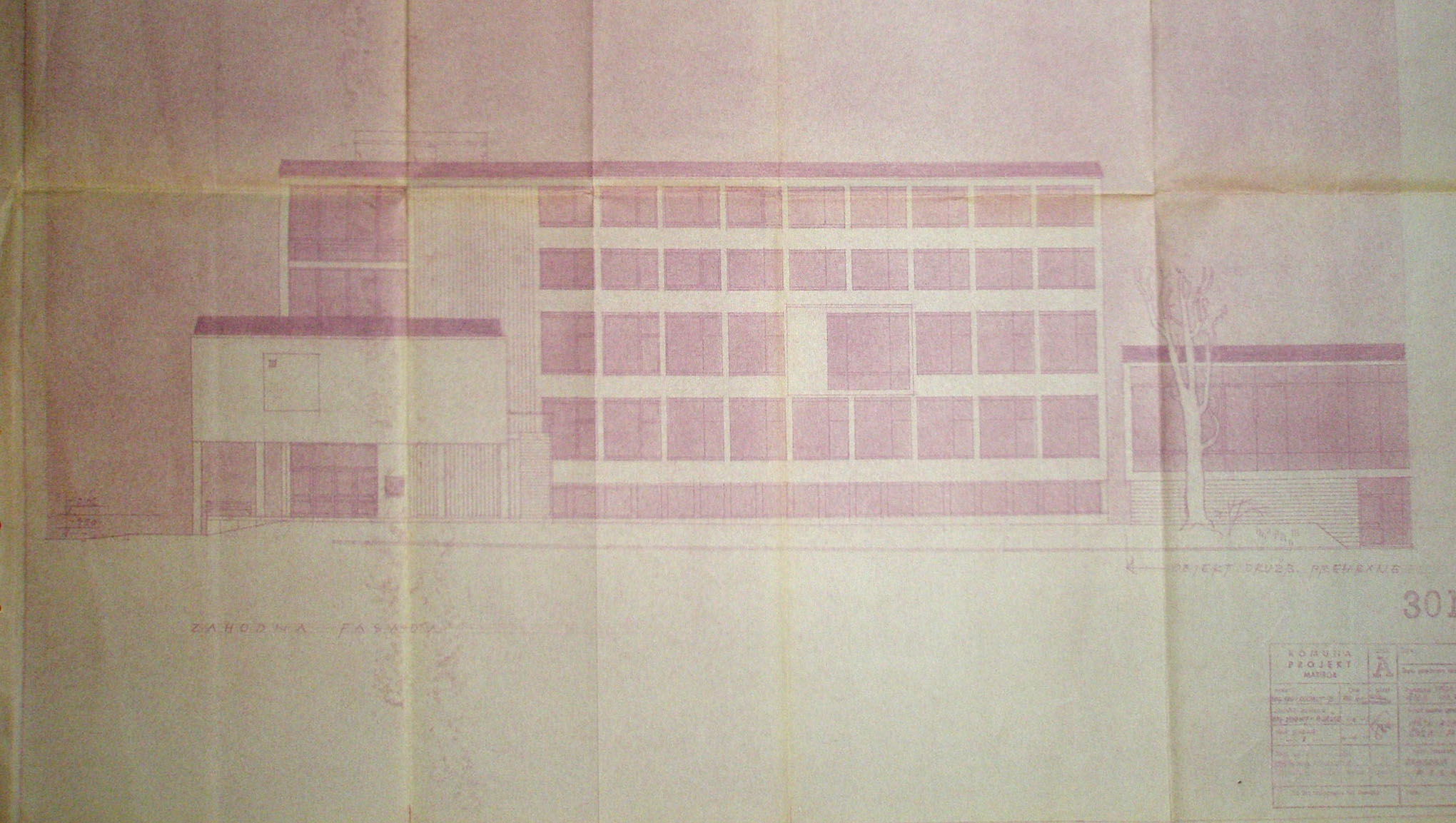
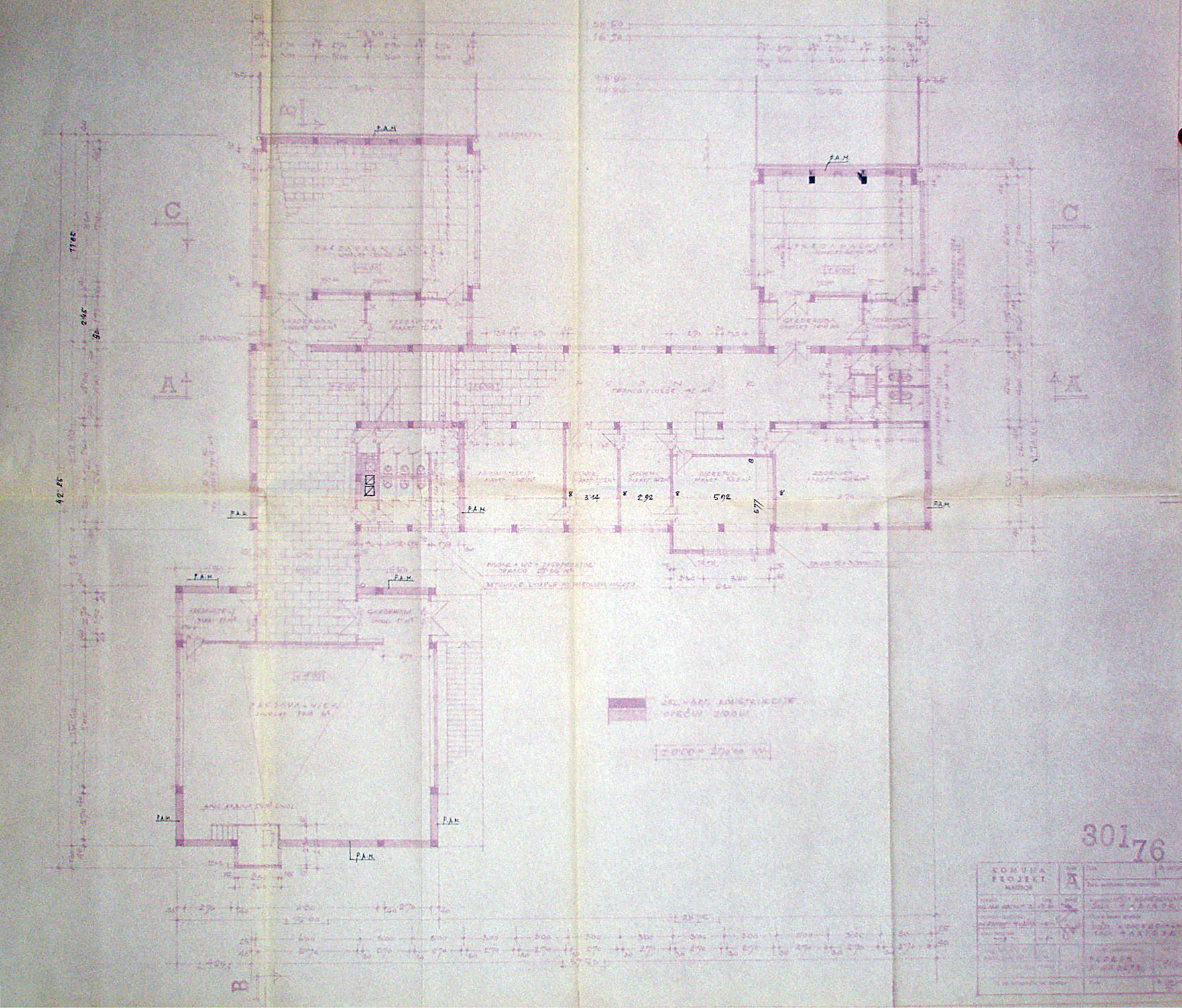
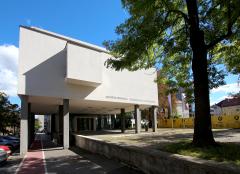
Kocmut designed the central building, constructed in a reinforced concrete framework, as a five-storey cube with a flat roof, oriented in the direction of north-south. Two extensions with a square ground plan and two larger classrooms are attached on the northern and southern edge of its eastern, otherwise courtyard façade. The courtyard, which is shared with the neighbouring Historicist apartment building, is accessible under the southern extension, with which the building also leans on its older neighbour. Both buildings match in gabarits. The western façade of the central building faces Prešernova ulica. Large windows covered with outer shades are strung on the façade, while two bands of rod concrete curtains, which disperse the prevailing impression of horizontals, run slightly out of the central bay up the whole height of the building. In the width of two window bays on the second floor, a shallow oriel opens out of the flatness of the façade, which is a characteristic element in Kocmut's architecture. The ground plan of the elongated cubic building is repeated on all floors: the elongated space is separated lengthways into a hallway, which runs along the eastern side and from where it is possible to access classrooms, offices, the library and other rooms that are strung along the western side and illuminated with large windows. The differences in the levels of the storey are overcome by a two-flight staircase with a simple bannister.
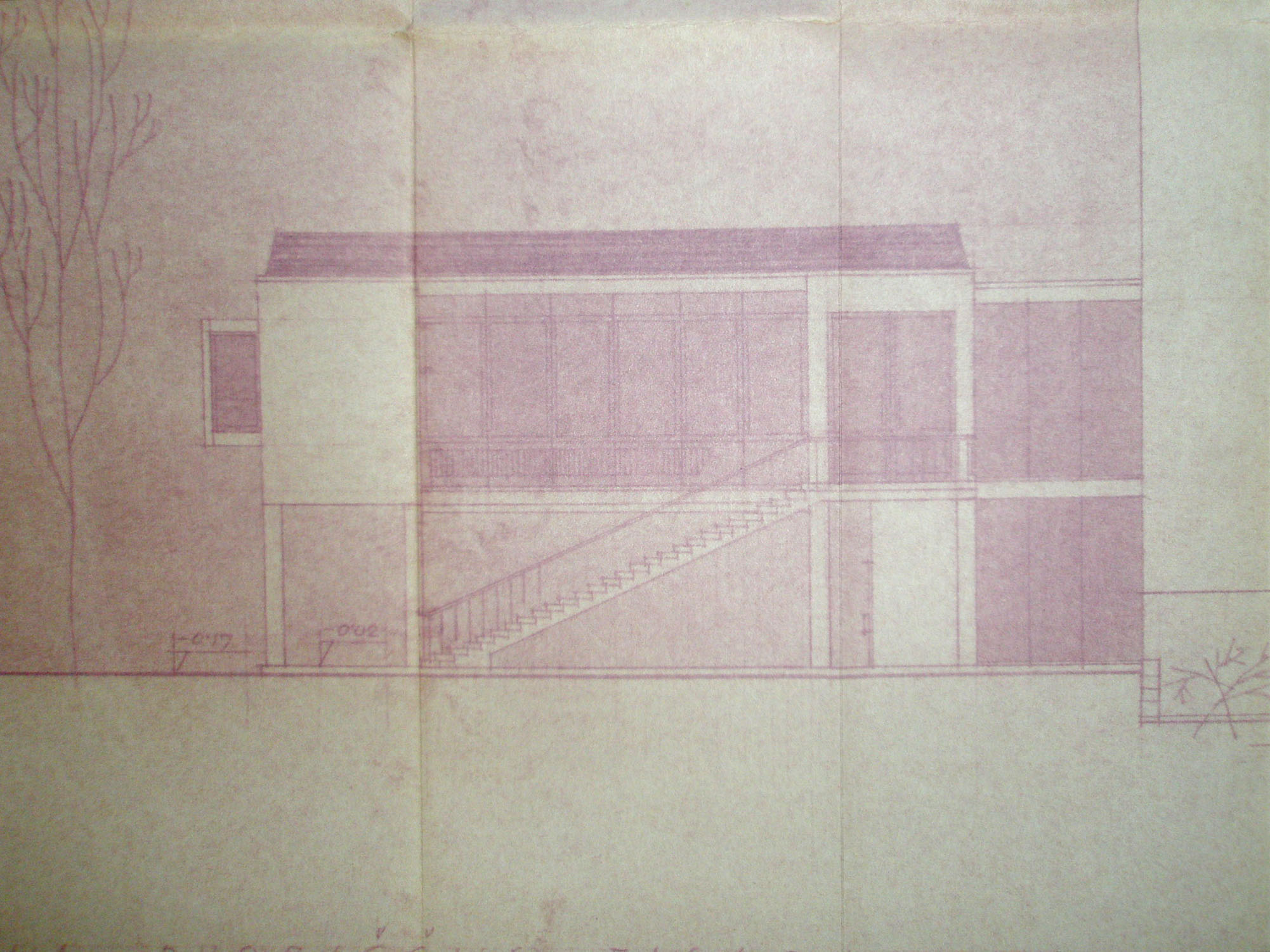
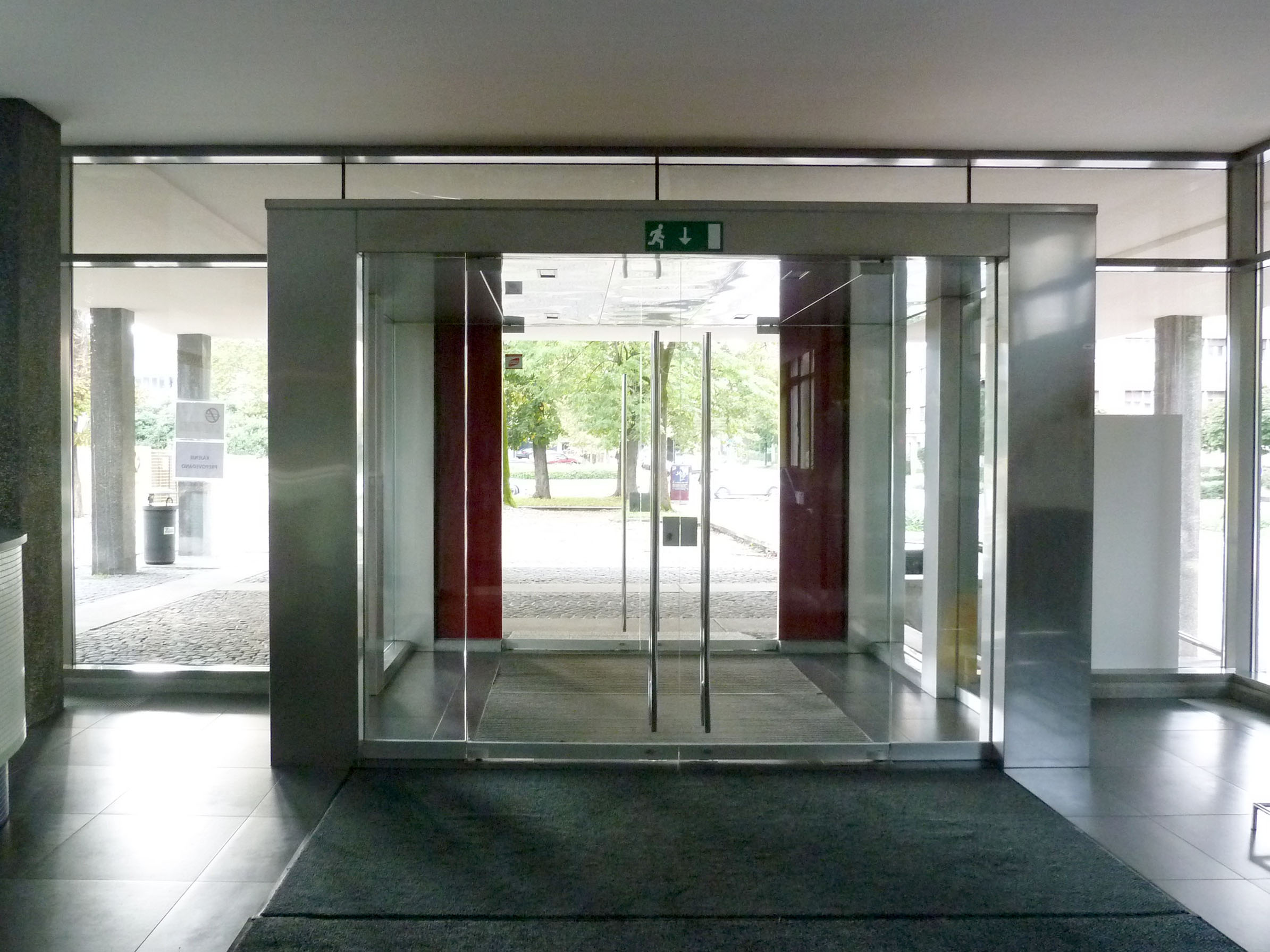
An independent lower and smaller building with a square ground plan and a flat roof, standing on 16 square concrete columns covered with terrazzo is attached to the northern part of the western façade with a transparent ground floor glazed hallway. The ground plan of this independent building, where a large classroom is situated on the floor, is moved slightly outside of the northern façade. With its columns, it reaches the pavement along Razlagova ulica and creates a covered pedestrian area. The entrance to the school leads through this colonnaded area and the connecting glazed hallway. The large classroom on the floor opens towards the south and the north with large windows, while on the western façade of the entrance cube, Kocmut's typical oriel with a full western side and glazed shorter southern and northern sides is repeated.
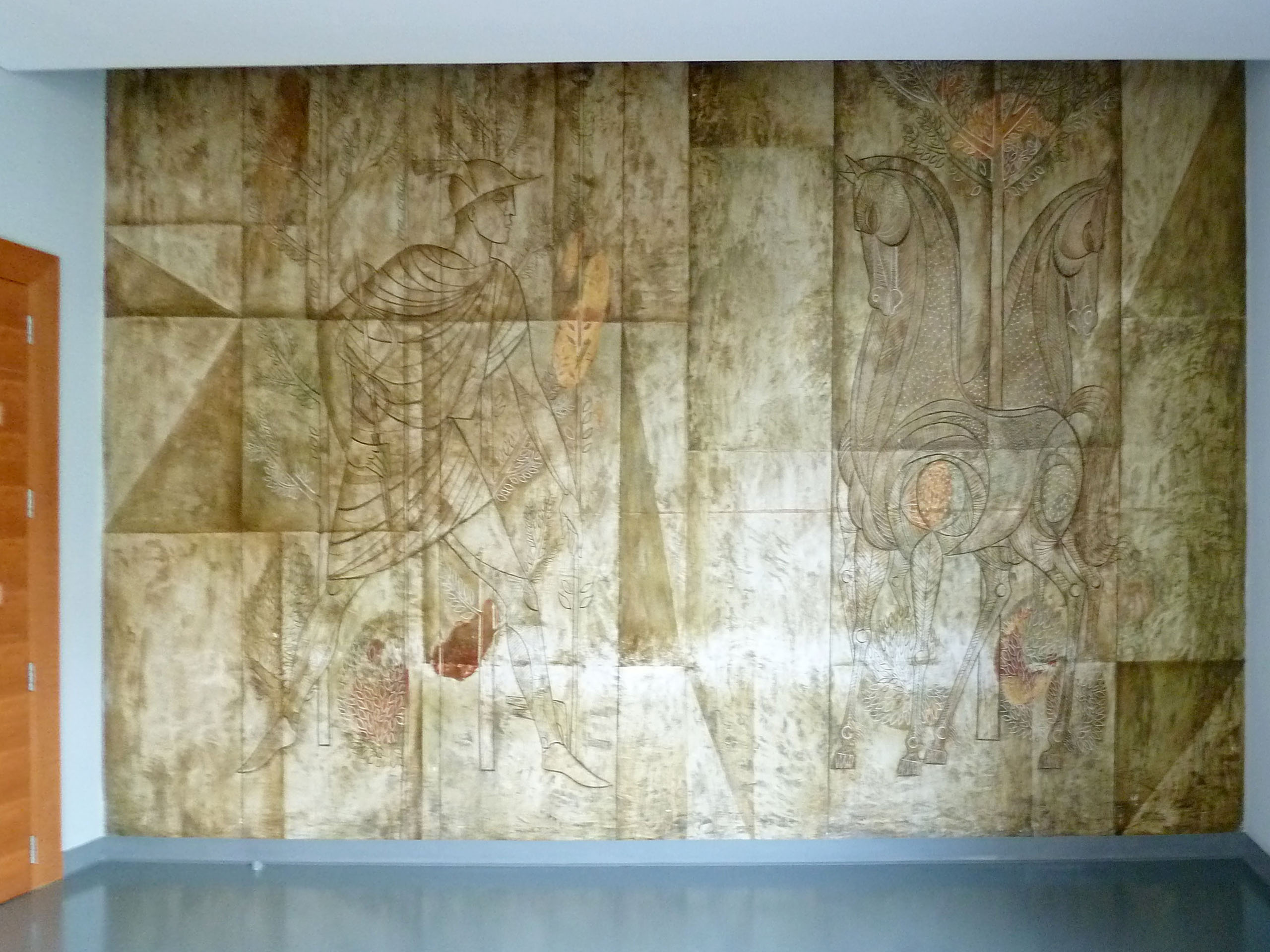
The interior design was created by architect Mirko Zdovc (1927), who frequently worked with Branko Kocmut. During the last renovation, which respected Kocmut's architecture, the majority of the building's furniture was replaced and the interior painted in bright colours. The only original furnishings preserved are the inscribed plaque with information about the construction and the information counter shaped like a kidney and covered with mosaics, both found on the ground floor. The wall of the large classroom on the first floor is decorated with a wall painting (sgraffito) by Janez Vidic (1923-1996), where he combined the outline drawing 13 incisions 13 with colour and partly even with a gold background. The motif corresponds to the mission of the school: it represents a slightly stylized figure of Mercury with two horses standing opposite him.
Kocmut's School of Economics and Commerce is one of the few modernist buildings in Maribor that is included in practically every overview of recent Slovene architecture. Kocmut established the impression of lightness in the whole complex and the spatial flow, while the interior is richly lit because of the large windows. Stane Bernik connected the articulation of the building mass, typical of Kocmut and most clearly visible precisely in the School of Economics and Commerce, with the Russian Constructivist tradition and the Corbusier type of modernism. Aside from Branko Kocmut, numerous other Slovene architects working in the second half of the 20th century used this type of articulation as well. In Maribor, Ivan Kocmut's (1926-2009) Home of Social Organizations (1966), which is comparable to the School of Economics and Commerce, stands out. It is especially important to point out the motif of the oriel, known as the trademark of the Kocmut brothers. Jelka Pirkovič emphasised the building of the School of Economics and Commerce as the best example of the "Maribor school of contemporary architecture", which she connected with the circle of architects from the Komuna projekt.
South of the School of Economics and Commerce, the Center restaurant by architect Rudi Zupan (1921-2002) was built simultaneously (1961). However, it was recently demolished after a long-lasting polemic. A platform above an underground garage, which is planned to be built upon, is currently in its place.
Marjeta Ciglenečki
(23 September 2014)